Digital Marketing
Digital Marketing Strategy Services That Map Budget to Revenue
One documented plan that names your customers, your channel mix, your budgets, and your numbers. You own it outright, and it works whether or not we execute it.
Get Your Free Proposal Call (888) 644-7795
- One documented plan you own outright
- Every channel budget argued in writing
- Free proposal, no obligation
As Featured In






Digital marketing strategy development is the work of turning business goals into a documented growth strategy and marketing plan: who you sell to, which channels reach them, what each channel gets to spend, and how results get measured. Egochi builds these plans as a standalone engagement. You bring the revenue target; we bring the research, channel math earned running search, paid, social, email, and content programs since 2014, and a written roadmap your team can execute with us or without us. The plan answers the questions random-acts marketing never does: where the demand is, what winning it costs, and which order to buy the work in. Pricing is flat and published below, and the next step is a free proposal that names what your plan would cover.
How much does a digital marketing strategy cost?
A documented strategy from Egochi runs $2,500 for a strategy audit of your current marketing and $7,500 for a full engagement with personas, competitor analysis, channel budgets, and a twelve-month roadmap, with custom scoping for multi-brand organizations. Both are one-time fees, no setup charges. Execution is separate: managed programs run $1,500 to $15,000 monthly, and the plan works with or without them.
Egochi is a digital marketing agency with offices in New York, Miami, Milwaukee, and Madison, with 250+ Google reviews and 190+ Clutch reviews at a 5.0 rating behind the work, serving local businesses through corporate and enterprise teams. Strategy is where every engagement here starts, and this page is for the businesses that want the plan itself: as a deliverable, priced flat, documented well enough that any competent team could run it. That portability is deliberate. A strategy that only makes sense while its author is in the room is not a strategy, it is a dependency.
What Your Strategy Engagement Delivers
Nine documented deliverables, custom-built from your market's evidence, handed over in files your team can edit and assign. Not a template with your logo on it.
-
Goals Framework
Revenue, lead, and market-share targets written as numbers with dates and owners attached. Every later page of the plan traces back to these, so nothing in it exists for its own sake.
-
Buyer Persona Documentation
Three to five researched personas: who buys, what problem drives them, what objections stall them, who else weighs in, and where they go for information. Detail deep enough to shape ad targeting and page copy, not a poster of stock photos.
-
Customer Journey Maps
The path from first search to purchase and repeat business, drawn stage by stage with the content and channel each stage needs. Journey maps are where content gaps stop being invisible.
-
Competitor Analysis Report
Five to ten competitors read closely: their channels, messaging, content, spend signals, and market position. The point is not imitation. It is finding the segments and angles they leave uncovered.
-
Channel Mix and Budget Plan
The recommended mix with an allocation for each channel, the reasoning behind every number, and a forecast of what each dollar is expected to return. The decision rules we apply are published further down this page.
-
The Twelve-Month Roadmap
A quarter-by-quarter execution schedule: campaign themes, launch order, resource needs, and milestones. Written so your team, or any team, can run it as a checklist rather than a wish list.
-
Messaging and Positioning Playbook
Your positioning statement, value proposition, and key messages per persona, with voice rules that keep every channel sounding like one company. Consistency here is what makes the channels reinforce each other.
-
KPI Framework and Reporting Design
The metrics that decide whether the plan is working, with reporting cadence and honest benchmarks. The dashboard and event wiring underneath belong to our Google Analytics services when you want them built.
-
Marketing Tech Recommendations
An audit of your current analytics, CRM, email, and campaign tools, with recommendations that fit your team size. We recommend what works, not what pays a referral fee; several of our usual picks pay nothing.
A Strategy Is Not a Stack of Tactics
Most marketing that fails was tactics wearing a strategy costume. Running ads is a tactic. Posting on LinkedIn is a tactic. Publishing blog articles is a tactic. Here is the test we use, and what changes when a real strategy sits above the tactics.
-
If You Can Buy It by the Hour, It Is a Tactic
Anything a freelancer can start tomorrow without asking about your business goals is execution, not direction. Strategy is the set of decisions that cannot be delegated by the hour: which customers, which position, which channels, which order, how much.
-
Strategy Starts at the Revenue Target and Works Backward
Fifty new enterprise clients in twelve months implies a number of qualified conversations, which implies channels that reach enterprise buyers, a message their committee repeats internally, and a budget sized to the sales cycle. Work the chain backward and the tactics choose themselves.
-
Without the Plan, Channels Compete Instead of Compound
Keyword research should feed both organic content and paid targeting. Social should redistribute what content earns. Email should nurture what paid captures. When nobody owns the whole picture, each channel bills separately for work the others could have shared.
-
The Document Is What Survives the Meeting
Verbal strategy evaporates by Thursday. A written plan can be challenged, budgeted, assigned, and audited a quarter later. If your current agency cannot hand you the document, what they have is a habit, not a strategy.
The Research the Plan Stands On
Every recommendation in the plan carries its evidence with it. Four research streams run in every engagement, and each one exists to kill a guess.
-
Demand Research Before Anything Else
What your buyers actually search, ask, and click, measured, not assumed. Demand data decides whether a market is won through capture of existing intent or creation of new attention, which is the single biggest fork in any plan.
-
Personas Built From Interviews and Data
We talk to your sales team and, where possible, your customers, then check the stories against analytics and search behavior. A persona that came only from a workshop whiteboard is a fictional character with a job title.
-
Competitor Reads That Look for Gaps
Competitors reveal where the market fights and where it forgets to. Heavy paid spend with weak organic coverage, identical messaging across every rival, an underserved segment nobody speaks to: each gap becomes a numbered opportunity in the plan.
-
Journey Mapping That Exposes the Leaks
Mapping the path to purchase shows where prospects stall in the funnel: strong awareness content but nothing that helps comparison, or traffic that arrives and finds no next step. Fixing the on-page half of those leaks is experiment work that belongs to our conversion rate optimization services; the map tells you which leaks are worth the tests.
How We Decide Your Channel Mix and Budget
Budget allocation is where strategy gets real, because a percentage is a decision you have to defend. These are the rules we apply, in order, when the plan splits your marketing budget across channels.
-
Demand Decides the First Dollar
Budget goes first to channels where buyers already search for what you sell. Captured demand converts at a fraction of the customer acquisition cost of created demand, which is why SEO services anchor most of our plans: rankings compound while ad spend resets to zero each month.
-
Speed Gets Bought When Waiting Costs More
Organic compounding takes months, and some businesses cannot wait. When the math says leads are worth more now than cheaper later, the plan buys speed through PPC advertising and tapers it as organic carries more of the load.
-
Consideration Content Earns Its Own Line
Buyers who compare before they choose need comparison material, and most markets underbuild it. Where journey research shows a consideration gap, the plan funds content marketing against the questions your sales team answers by phone today.
-
Attention Channels Are Scored, Not Assumed
Social budget is earned by evidence that your buyers make decisions there, which is true for visual consumer brands and rarely true for, say, industrial B2B. When the audience research supports it, social media marketing gets a defined job and a number, never a default line item.
-
The Owned Audience Gets Funded Last and Kept Forever
Every rented channel feeds the one you own. A list your company controls is the cheapest revenue you will ever have, so the plan wires email marketing to capture what the other channels attract, and no plan we write leaves it out entirely.
Two rules bind all five. Concentration beats coverage: a budget spread across six channels at survival rations loses to the same budget winning two. And every allocation ships with kill criteria, the number at which we agree to stop, so no channel survives on sunk cost. Each channel above is a program Egochi runs under our digital marketing services, but the plan recommends what the evidence supports, including channels we do not sell.
Questions Businesses Ask Before Buying a Strategy
-
How long does it take to develop a digital marketing strategy?
A complete strategy takes four to six weeks: discovery and stakeholder interviews, market and competitor research, audience definition, channel and budget planning, then documentation your team reviews before sign-off. Complex organizations with several business units run longer. Anyone promising a real strategy in a week is reformatting a template, and a rushed plan costs more to correct during execution than it saved.
-
What is the difference between a marketing strategy and a marketing plan?
Strategy is the direction: which customers you pursue, how you position against competitors, and which goals define success. The marketing plan is the schedule that carries it out: campaigns, budgets, deadlines, and owners. Strategy answers what and why, the plan answers how and when. An Egochi engagement documents both, because a strategy nobody scheduled is a memo, not a plan.
-
How much should a business spend on digital marketing?
Most businesses put five to fifteen percent of revenue toward marketing, and companies in growth mode push closer to twenty. The honest answer starts from your goal, not a percentage: the strategy works backward from the revenue target to the leads it requires, then prices the channel mix that can produce them. Budget becomes an output of the math, not a guess.
-
Which digital marketing channels should I prioritize?
It depends on where your buyers already look. B2B firms usually lead with search and LinkedIn, local service businesses with local search and reviews, ecommerce brands with shopping ads and social commerce. The strategy scores each channel against your audience, margin, and speed requirements, then puts budget where the evidence points. Choosing channels before that research is how budgets get wasted.
Who Should Build Your Marketing Strategy
Three ways to get a marketing strategy, and each is right for somebody. Honest credit where it is due, because the wrong buyer wastes money on us too.
-
Templates and DIY
Free to a few hundred dollars, and legitimate for a very small business with simple needs and more time than budget. What templates cannot supply is comparative data, competitor tooling, and the pattern recognition of having watched many plans meet reality. The blind spots stay invisible until execution finds them.
-
An In-House Strategist
The right call once marketing spend justifies a dedicated team, commonly north of $150K a year all-in, since salaries alone run $80,000 to $150,000. In-house wins on product knowledge and daily presence. The trade is a single-company vantage point and the office politics that make internal verdicts negotiable.
-
A Strategy Engagement With an Agency
A flat fee buys an outside read with cross-industry benchmarks, professional research tooling, and no stake in flattering last year’s decisions. The honest caveat: many agencies write strategies that conveniently prescribe only their own services. Ours is priced to stand alone and written to be executable by any team, which keeps us honest.
Our Strategy Development Process, Built on EGOCHI VERTEX™
A strategy engagement is the Validate phase of the EGOCHI VERTEX™ Growth System run once at full depth. Its named deliverable is The Growth Thesis: where the demand is, what it costs to win, and which channels carry the plan, every number sourced and every assumption named. The six steps below are how that document gets built in four to six weeks.
-
Discovery and Goal Setting
Stakeholder interviews, a read of your current marketing and its numbers, and goals restated as figures with dates. If your goals contradict each other, this is the week it surfaces, cheaply.
-
Market and Competitor Research
Market research in earnest: demand measurement across search and social, competitor channel and messaging reads, and a sober sizing of the opportunity. This is where the plan earns the right to have opinions.
-
Audience Definition
Your target audience defined properly: personas built from interviews and analytics, segments ranked by value and reachability, and journey maps that show what each stage of the decision needs from you.
-
Channel Mix and Budget
The decision rules above applied to your market: which channels, what each gets to spend, what each must return, and the kill criteria that keep the mix honest.
-
Tactical Planning
The twelve-month roadmap: campaign themes by quarter, launch order, the messaging playbook, and resource needs, sized to the team that will actually execute, yours or ours.
-
Measurement Design
The KPI framework, reporting cadence, and benchmark targets, defined before execution starts so month one is measured against a plan instead of remembered against a feeling.
The EGOCHI VERTEX™ Growth System is the operating system behind every Egochi engagement; when we execute your plan, the remaining phases pick up exactly where this document ends.
Digital Marketing Strategy Pricing
One-time fees for a deliverable you keep. No setup charges, and no requirement to run the plan with us.
-
Strategy Audit
An outside read of the marketing you already run.
$2,500 one-time
- Current-state analysis across every active channel
- Channel performance review against benchmarks
- Gap analysis and quick-win list
- Written recommendations with a review call
-
Full Strategy
The complete documented plan, research through roadmap.
$7,500 one-time
- Discovery and goals workshop
- Competitor analysis, five to ten firms
- Three to five researched buyer personas
- Customer journey maps
- Channel mix and budget plan
- Twelve-month roadmap and messaging playbook
- KPI framework and reporting design
-
Enterprise Strategy
Multi-brand, multi-unit, or market-entry planning.
Custom scoped to the organization
- Multiple business units or brands
- Market expansion planning
- Cross-channel attribution design
- Marketing technology planning
- Executive presentation of findings
Execution is a separate decision, made after you have read the plan. Managed programs at Egochi run $1,500 to $15,000 per month depending on scope, month to month, with no long-term contracts and no setup fees.
How We Price a Strategy Engagement
Strategy work is one-time and flat-priced, so the variables here decide which tier fits rather than sliding a meter.
-
Audit or full engagement
The $2,500 strategy audit reviews the marketing you already run and names what to fix. The $7,500 full engagement builds the plan from scratch: personas, competitor analysis, channel budgets, and a twelve-month roadmap. The audit fits when execution exists; the full engagement fits when it does not.
-
Brand and channel count
One brand on two channels is the base case. Multi-brand organizations, or a single brand spread across many channels and markets, add research and interview time, which is why multi-brand work is scoped custom instead of forced into a tier.
-
What happens after the plan
Execution is a separate decision: managed programs run $1,500 to $15,000 monthly, and the plan is written to work with or without them. Nothing in the strategy fee depends on buying execution from us.
Both tiers are one-time fees with no setup charges, and the proposal names the tier, the timeline, and the price in writing.
Is a Strategy Engagement Right for You?
Who this is for
- You are spending real money on marketing without a written plan, and nobody can say which channel earns its budget. The strategy replaces opinions with arithmetic.
- You are entering a new market, launching an offer that needs a go-to-market plan, or coming off a growth stall, the three moments when last year’s habits are most likely to mislead you.
- You have an in-house team or agencies to execute, and what is missing is the direction document that makes their work add up to one program.
- You have been burned by an agency whose strategy mysteriously prescribed only its own services, and you want a plan priced to stand alone.
When this may not be the right fit
- Your total marketing budget is under roughly $2,000 a month. A strategy document would eat months of execution money; a focused single-channel program with a plan inside it serves you better, and we will say so.
- You need leads this month. Strategy is four to six weeks of research before a dollar moves. The honest sequence for urgent pipelines is ads now, strategy behind them.
- You want a document to validate decisions already made. We write what the evidence supports, and an engagement bought as a rubber stamp disappoints both of us.
Fair Questions Before You Pay for a Strategy
Can we skip the strategy and just start running campaigns?
Sometimes, honestly, yes. A single-location business with one obvious channel does not need a five-figure planning engagement; it needs the channel run well, and every Egochi program includes planning at that scale. The strategy engagement earns its fee when the money is real and the choices are not obvious: several plausible channels, several audiences, a budget big enough that a wrong split costs more than the plan. Below that line, buy execution. We will tell you which side of the line you are on in the first call.
Will the plan just recommend more Egochi services?
The plan recommends what the evidence supports, and the document is built so you can take it anywhere. That is not marketing generosity, it is the product: a strategy priced as a standalone deliverable has to survive scrutiny from whoever executes it, including a rival agency. When a channel we sell is the wrong buy for you, the plan says so in writing, because a recommendation we cannot defend in the document is a recommendation we lose credibility on for the rest of the engagement.
How is a paid strategy different from the free proposal every agency offers?
A free proposal, ours included, is a sales document: a sketch of what we would do, built from public data in a few hours. A strategy engagement is four to six weeks of research your business sits inside: stakeholder interviews, demand measurement, competitor tooling, persona work, and budget math, ending in a document you own. The free proposal tells you whether hiring us is plausible. The strategy tells you where your market’s money actually is. One is an ad, the other is the work.
Is a twelve-month roadmap fiction after the first quarter?
An unrevisited one is. Markets move, competitors react, and a roadmap treated as scripture becomes fiction by summer. The direction layer of a good strategy, your customers, position, and goals, holds for a year or more; the tactical layer is written to be re-argued quarterly against the numbers. The roadmap marks those review points on the calendar. What the annual plan buys you is a stable frame for those quarterly arguments, so revisions are course corrections instead of reinventions.
The Client Engagements Behind This Page
Strategy shows up in the numbers as coordination: several channels answering to one plan and one budget. Every figure below is register-fed and covers its engagement whole, the way the client read it in the reports.
-
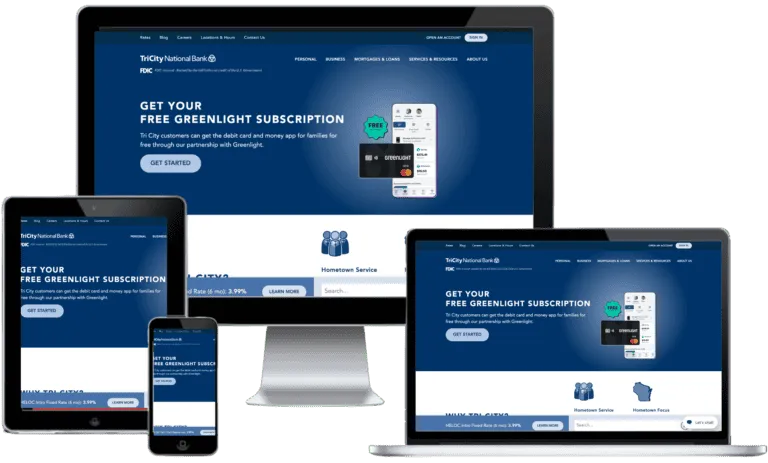
TriCity National Bank
Community Bank | Wisconsin
A community bank buying visibility against national names, where the plan decided what search, paid, and email each had to carry. The channels ran as one program to one budget, and the registered numbers read across the whole engagement.
- +90% Organic Traffic
- +77% PPC Conversion Rate
- +80% Email Engagement
-

Culbertson Law
Family Law | Greensboro NC
A family law practice whose strategy question was which searches produce signed cases, not which produce traffic. Research reset the targeting, then search, site, and call tracking executed the plan; numbers cover the engagement whole.
- +91% Qualified Calls
- 8 → 41 monthly Signed Cases
- 35 → 98 Form Leads
-

Maria Antoinette
Real Estate | Madison WI
An independent realtor whose budget could not survive being spread thin. The plan concentrated spend on local search, paid clicks, and an owned email list, and the engagement reads whole across those channels.
- 6 → 28 monthly Organic Leads
- 45% PPC Click-Through Rate
- 50% Email Open Rate
-

Ellie Wilde
Fashion Ecommerce | National
A prom dress brand with a season instead of a year, so the calendar mattered as much as the channel mix. Search, paid, and email ran to one seasonal plan, and the registered figures cover the engagement.
- 100K+ Monthly Organic Visitors
- 60% PPC Click-Through
- 70% Email Open Rate
-
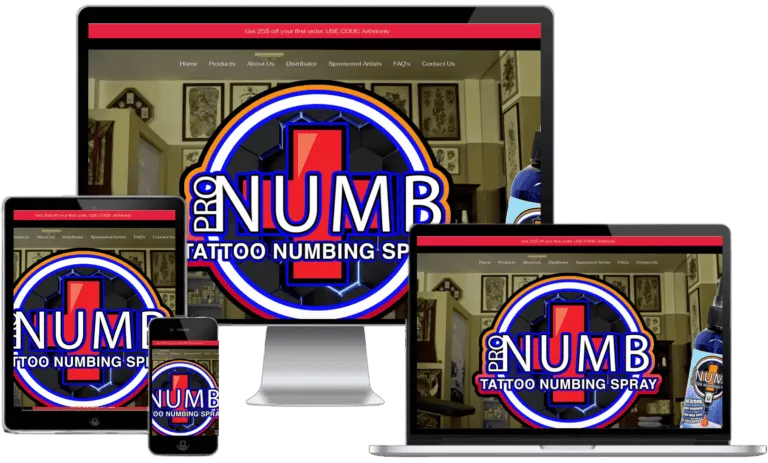
Pro Numb
Topical Anesthetics | Shopify DTC
A Shopify brand whose growth thesis named organic search and answer visibility as the channels worth owning. Store, content, and search ran as one program against that plan; all figures confirmed.
- $2M+ Monthly Revenue
- +340% Organic Traffic
- 47 Featured Snippets
-
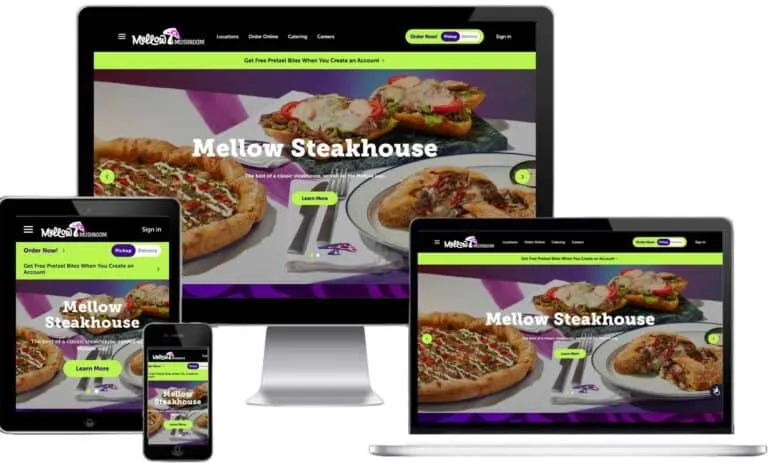
Mellow Mushroom
Restaurants | Multi-Location
A multi-location restaurant brand whose strategy is fought market by market: local visibility first, orders as the scoreboard, budget following the locations with headroom. Whole-engagement numbers as published.
- +312% Local Traffic
- +245% Online Orders
- Top 3 Local Pack
-

Corcoran Group
Real Estate | New York
A real estate brand in the country’s most competitive property market, where the plan had to choose battles the budget could actually win. Search and site work ran together; numbers cover it whole.
- +300% Leads in 12 Months
- +120% Organic Traffic
- 13.8 → 4.2 Avg. Position
The full write-ups live in our case studies library, sliced by service, industry, and platform so you can read the engagements closest to yours.
Meet Your Strategy Team
The channel leads who run search, paid, social, and content programs here are the same people who research and argue your plan, which keeps it biased toward what can actually be done.
-

Jobin John
Chief Executive Officer
-

Justin Brown
Head of Search Engine Optimization
-

Bryan Thomson
Head of Web Design & Development
-

Ina Komins
Head of Social Media Marketing
-

Kierra Pita
Head of Advertising & Content Marketing
-

Patricia Turner
Chief Creative Officer
-

William Carter
Chief Digital Strategy Officer
-

Andrew Miller
Senior SEO Strategist
-

Amy Robinson
Content Marketing Manager
-

Betty Harrison
PPC Campaign Specialist
-

Anthony Carter
Lead Digital Account Executive
-

Amanda Cooper
Social Media Director
-

Carol Parker
Senior Client Success Manager
-

Barbara Bennett
Email Marketing Lead
-

Charles Turner
Technical SEO Analyst
-

Brian Sullivan
Creative Director
-

Christine Walker
Director of Project Management
-

Christopher Brooks
Digital Marketing Strategist
-

Daniel Wright
Senior Analytics Specialist
-

David Henderson
Lead Content Strategist
-

Donna Mitchell
Client Communications Manager
-

Elizabeth Foster
Director of Paid Advertising
-

Emily Baredi
Brand Experience Specialist
-

Emma Scott
Social Media Content Creator
-

George Crawford
Technical Solutions Architect
-

Jacob Evans
Digital Content Coordinator
-

James Anderson
Marketing Automation Specialist
-

Jason Palmer
Junior Copywriter
-

Jeffrey Reynolds
Paid Media Analyst
-

Jennifer Lewis
Community Engagement Specialist
-

Jonathan Murphy
SEO Reporting Specialist
-

Joseph Morgan
Influencer Marketing Coordinator
-

Kenneth Stevens
Digital PR Manager
-

Kimberly Harper
Digital Marketing Intern
-

Kevin Morris
SEO Outreach Specialist
-

Lee Dawson
Junior Web Developer
-

Linda Peterson
Email Campaign Coordinator
-

Lisa Thompson
Social Media Ads Specialist
-

Margaret Bradley
Marketing Operations Lead
-

Mark Richards
Data & Insights Analyst
-

Mary Kennedy
Senior Copyeditor
-

Matthew Clark
Growth Marketing Manager
-

Michelle Sanders
Junior Marketing Designer
-

Michael Foster
Senior Conversion Rate Specialist
-

Nancy Wheeler
Digital Analytics Manager
-

Nicholas Pierce
Affiliate Marketing Specialist
-

Nicole Adams
Outreach Program Coordinator
-

Paul Franklin
Paid Social Campaign Manager
-

Richard Barnes
Reputation Management Specialist
-

Robert Murphy
Lead Solutions Architect
-

Ronald Davis
Marketing Technology Analyst
-

Ryan Bell
Paid Media Buyer
-

Sandra Gregory
Digital Account Coordinator
-

Scott Hopkins
CRM Implementation Specialist
-

Shirley Ellis
Customer Insights Manager
-

Stephanie Cross
Brand Content Designer
-

Steven Greene
Web Analytics Specialist
-

Susan Price
Affiliate Campaign Manager
-

Thomas Fisher
Lead Technical Architect
-

Timothy Nash
Mobile Marketing Strategist
Digital Marketing Strategy FAQs
What do you need from us to build the strategy?
Access and honesty, mostly. Analytics and ad account access, an hour or two with the people who own the revenue number, a conversation with whoever talks to customers all day, and your real constraints: budget, team capacity, and any sacred cows we should challenge on paper first. Businesses that share their sales objections and lost-deal reasons get sharper personas than any research tool alone can produce. The engagement is structured so your team spends hours on it, not weeks.
Do we have to hire Egochi to execute the plan?
No, and the document is written on that assumption. Every recommendation carries enough specificity, the channels, the budgets, the sequence, the success metrics, that your in-house team or another agency can run it without calling us to interpret it. Plenty of clients do exactly that. Others hand us some channels and keep others in-house. The plan prices and sequences the work either way, and choosing us for execution is a separate decision you make after reading it.
What does the finished strategy actually look like?
A written document and its working files, not a slide deck that evaporates under questioning. You get the goals framework, personas, journey maps, competitor report, channel and budget plan, twelve-month roadmap, messaging playbook, and KPI framework as usable documents your team can edit and assign. Findings are presented live so your team can push back while the researchers are in the room, and the document ships after that session incorporates what the pushback exposed.
Can you audit or refresh a strategy we already have?
Yes, that is what the strategy audit tier is for. We read the existing plan against your actual performance data, name what is working and should not be touched, flag recommendations that evidence no longer supports, and list the quick wins hiding in the gap between the two. Sometimes the verdict is that your plan is sound and the problem is execution discipline, and we will say that plainly, because a refresh you did not need is the first recommendation a plan cannot survive.
How does the engagement work with our in-house marketing team?
As a collaboration, not an audit from above. Your team knows the product, the customers, and the history; we bring outside benchmarks, research tooling, and the freedom to say things that are awkward to say internally. In practice that means your marketers sit in the discovery sessions, review research as it lands, and challenge the draft before it ships. The best outcome is a plan your team considers theirs, with our name on the research they would not have had time to run.
Which industries do you build strategies for?
The research method is industry-agnostic, and the engagement has run for law firms, medical and dental practices, home services, B2B software and services, financial services, real estate, restaurants, and ecommerce brands. What changes by industry is the evidence: a personal injury firm and a Shopify store get different channel math, different journey maps, and different benchmarks. Where an industry carries compliance weight, healthcare, finance, legal advertising rules, the plan is written inside those constraints rather than footnoting them.
Who actually does the strategy work?
The channel leads who run programs here, not a separated planning department. Search strategy comes from the people who rank sites, paid recommendations from the people who manage spend, and the engagement is led from our senior team with Jobin John, our CEO, across every full strategy. That matters because strategy written by people who never execute drifts toward the theoretically elegant; ours is biased toward what the people who will be graded on it believe can be done.
How do I choose who builds our marketing strategy?
Whether you are vetting a marketing consultant or an agency, ask to see a sanitized past deliverable: real strategy documents name budgets, owners, and kill criteria, not just channel names. Ask whether the plan is written to be executable by any team, and whether you own it outright at a flat fee. The walk-away sign is a strategy that prescribes only the services its author sells, with no evidence argued for each allocation.
How do I get started?
Send the proposal form below or call, and tell us your revenue goal, your rough budget, and what your marketing looks like today. You get back a free written proposal naming what a strategy engagement would cover for your business, the tier that fits, the honest timeline, and the price. If the truthful answer is that you should buy execution first and skip the planning fee, the proposal will open by saying so.
Ready for a Plan That Says Where Every Dollar Goes?
Tell us your revenue goal, your rough budget, and what your marketing looks like today, and we will send back a free written proposal naming what a strategy engagement would cover, the tier that fits, the honest timeline, and the price. If the truthful answer is execution first, the proposal will open by saying so.
Questions? Call (888) 644-7795 or email [email protected]
Egochi Stats
- $200M+ Client Revenue Generated
- 500+ Clients Served
- 250+ Google Reviews
- 190+ Clutch Reviews
- 12+ Years in Business
- 60+ Team Members
- 150+ Websites Delivered
- Premier Google Partner
Blog Posts
- Sep 27, 2026 Google September 2026 Spam Update Rolls Out Worldwide
- Aug 12, 2026 GEO vs. SEO: A Comparative Guide for Digital Marketers
- Aug 12, 2026 What is llms.txt? | How to Create llms.txt file for your website
- Aug 12, 2026 What is Semantic SEO? | How to Build Topical Authority That Ranks
- Aug 12, 2026 What is Schema Markup? | How to Add Structured Data to Your Website