Franchise Website Design
Egochi builds franchise websites around the fact that customers do not search for your brand; they search for what you do plus where they are. That makes location-page architecture the heart of the build: a real page per unit with genuinely local content, structured data, and a straight line to that unit's phone, booking, or directions. Corporate keeps design-system control; each location gets content lanes it can actually use; and adding the next unit takes a content entry, not a rebuild. Egochi settles the one-site-versus-microsites question on SEO evidence, not preference. Builds pair with marketing programs from $1,500 monthly. Start with a free architecture review of your current site.
Get Your Free Franchise Site Review See What's Included
- 250+ Google Reviews
- 190+ Clutch Reviews at 5.0
- Google Premier Partner
As Featured In






What Makes Franchise Web Design Different
Four architecture decisions Egochi settles early because they decide whether every location gets found.
One domain usually beats microsites
Splitting each unit onto its own domain divides the authority the brand spends years earning, and most franchise microsites never rank for anything. One domain with strong location pages lets every unit draw on shared authority. The exceptions exist (distinct brands, acquired systems) and Egochi argues them from data.
Find-and-replace location pages stopped working
A hundred pages differing only by town name read as doorway pages to search engines and as neglect to customers. Location pages that rank carry unit-real content: the team, the neighborhoods served, local proof, unit reviews. That takes a content system, which is exactly what Egochi includes in the build.
New units must not require new projects
A franchise site is judged by what happens when unit forty-one signs. If adding a location means a design project, the architecture failed. Templated location pages with structured fields let corporate spin up an on-brand, rankable page the week the agreement is inked.
Schema does the quiet work
Per-location structured data, consistent name-address-phone, and alignment with each unit's Google Business Profile decide how search engines connect your pages to map results. It is invisible in a design review and decisive in local rankings, so Egochi wires it into the template.
What's Inside a Franchise Website Build
Egochi delivers a design system for the brand and an architecture for every location.
-
Brand Design System
Egochi builds corporate-controlled components, type, and color so every page in the system is unmistakably the brand, with local content lanes built in.
-
Location Page Architecture
Egochi gives every unit a structured, rankable page: local content fields, unit reviews, service areas, hours, and a straight conversion path.
-
Local SEO Foundations
Egochi wires per-location schema, clean URL structure, and Google Business Profile alignment so map results and site pages reinforce each other.
-
Scale Without Rebuilds
Egochi makes adding a location a content entry with review steps, not a project; the architecture is tested against the next fifty units, not the current ten.
-
Speed at System Scale
Egochi ships static-fast pages across hundreds of URLs, because location pages that load slowly lose the mobile customers they exist for.
-
Per-Unit Analytics
Egochi tracks calls, forms, directions, and bookings to the exact location page that earned them, reported per unit and rolled up.
Franchise Sites Are What AI Assistants Read
When a customer asks Google AI Overviews, ChatGPT, Gemini, or Perplexity for the nearest location or whether a brand serves their town, and when a prospective owner asks which franchises fit a budget, the assistants answer from structured site data. A brand site with a store locator and nothing else gives them nothing to work with. Egochi builds franchise architecture those systems can parse, unit by unit.
Google AI OverviewsChatGPTGeminiPerplexity
-
A page per unit is an answer per unit
Assistants cite pages that describe one place cleanly: services at that address, hours, directions, the team. The location pages Egochi builds are structured exactly that way, which is why the same page earns classic local rankings and AI citations together.
-
Schema is the language assistants trust
Per-location structured data, consistent name, address, and phone details, and Google Business Profile alignment are how ChatGPT and Gemini connect a unit to a map result. Egochi wires that markup into the location template, so every new unit publishes AI-legible from day one.
-
Data that never disagrees across the system
A franchise multiplies the chances for one unit's hours to differ between site, schema, and profile, and an assistant that finds two closing times stops recommending. Egochi keeps every unit's data synchronized, so Perplexity and AI Overviews always find one version of the truth.
-
Franchise buyers read the answers too
Prospects ask assistants what ownership costs and how systems compare. Egochi structures development content, investment ranges, and credentials on the same architecture, so the brand is described accurately when the buyer's research starts with a question instead of a search.
How a Franchise Site Gets Built
-
Architecture and rankings review
Egochi inventories what exists: which location pages rank anywhere, which microsites hold authority worth keeping, where duplicate content sits. Nothing gets consolidated until we know what would be lost.
-
Design system with local lanes
Corporate-controlled components, type, and color get built once, with defined fields each location fills: team, service area, proof, offers. Brand control and local content stop being a tradeoff.
-
Location template and pilot pages
Egochi builds the location template and proves it on a handful of real units first, with schema, unit reviews, and conversion paths wired in. We test it against the system you plan to be, not the one you are.
-
Migration with redirects
Old URLs, retired microsites, and moved pages get mapped one-to-one to their new homes before launch, so the authority and rankings the system earned transfer instead of evaporating.
-
Handoff and the next unit
Corporate leaves with a documented launch path: structured fields to fill, review steps, and a page live within days of a signed agreement. Egochi has per-unit analytics running from day one.
Questions Systems Ask About the Build
We have a store locator. Why do we need location pages?
A locator answers people who already chose you; it does nothing for the far larger group searching a service plus a town. Locator entries are not pages search engines can rank, so those searches go to competitors with real local URLs. The locator stays, but it is navigation, not visibility.
Will consolidating our microsites lose the rankings some units have?
Handled carelessly, yes, which is why Egochi runs the rankings review before any consolidation decision. Pages with real authority get redirected one-to-one so their equity transfers, and in rare cases a microsite earning meaningful traffic keeps running until its replacement outranks it. The risk is real and manageable; ignoring it is the mistake.
Can our internal web team just duplicate a location template?
Building the template is the smaller half of the job. What decides whether the pages rank is everything around it: unit-real content standards, per-location schema, name-address-phone consistency, redirect planning, and page speed at hundreds of URLs. Teams that copy a template without that layer usually produce a tidy set of pages nothing ever finds.
How long does a system-wide website rebuild take?
Scale changes the number, so Egochi scopes it in the architecture review rather than quoting one figure. The sequencing matters more than the total: design system first, template proven on pilot units, then migration in waves with redirects tested per batch. Systems that rush the middle steps spend longer recovering rankings than they saved.
Common Mistakes to Avoid
-
Launching a locator pin instead of a page, leaving each unit invisible for every service-plus-city search.
-
Cloning one master page across every town, so search engines file the whole set as duplicates and rank none of it.
-
Killing old microsites without redirects and losing years of accumulated authority in an afternoon.
-
Skipping per-location schema and consistent name-address-phone details, so map results and site pages never connect.
-
Putting corporate brand storytelling above the fold of location pages while the phone number and hours hide below it.
Franchise Website Case Studies
Egochi publishes these receipts with the franchise restaurant leading and the build engagements behind it. Every number restates the client's published case study, and the enterprise receipts are labeled for what they are.
-
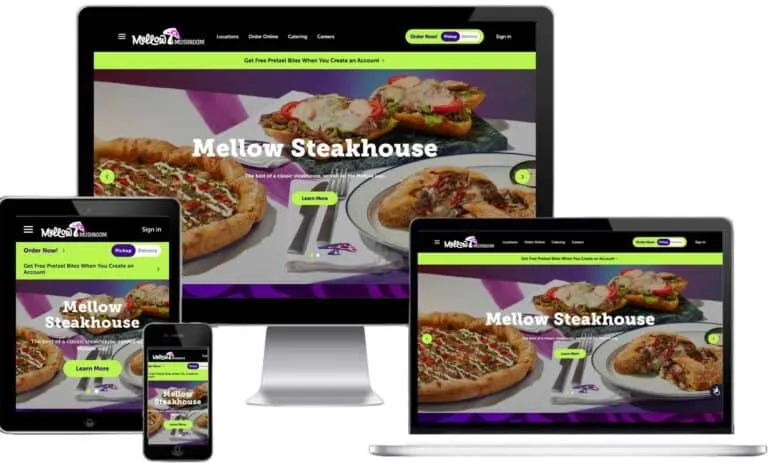
Mellow Mushroom
Restaurant Franchise | Local Visibility
A franchise pizza brand whose unit pages had to convert neighbors, not just describe the brand. Egochi ran the local program these published numbers restate, the demand every franchise build serves.
- +312% Local Traffic Growth
- +245% Online Orders Increase
- +90% User Engagement Increase
-
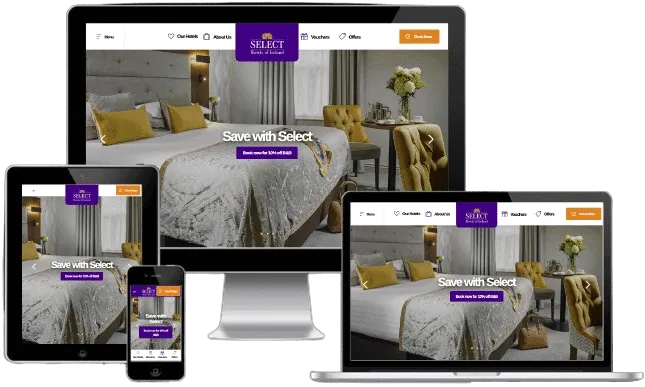
SELECT Hotels
Hotel Group | Web Design & Booking
A hotel group that needed one site to present multiple properties and take bookings for all of them. Egochi built the custom CMS and booking experience its published numbers restate.
- +70% Inquiry Surge
- +55% Booking Conversion Lift
- +65% User Satisfaction Rise
-
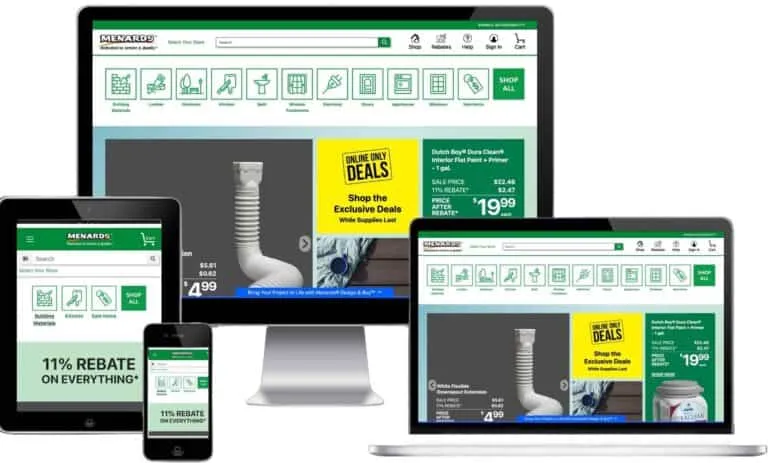
Menards
Home Improvement Retail | National
A national retail brand whose site carries an enormous footprint. Egochi ran the web and search work these published numbers restate, enterprise proof for the architecture-first method.
- +245% Traffic Increase
- +180% Conversions
- 2.3s Load Speed
-
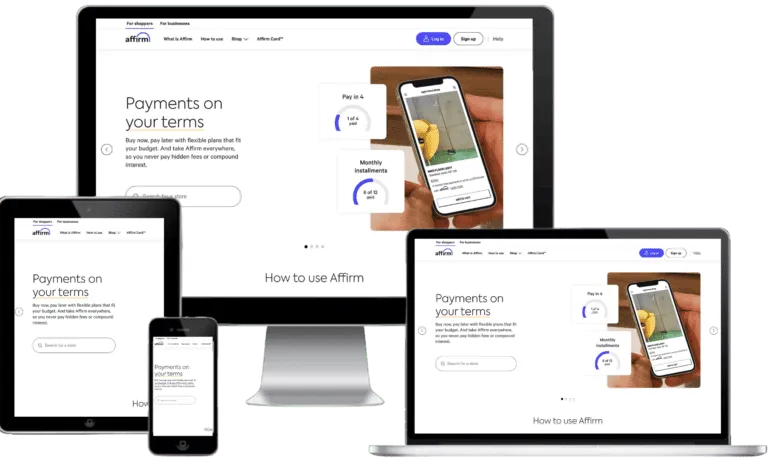
Affirm Holdings
Fintech | Custom ADA Build
A fintech roster receipt: Egochi built the custom ADA-compliant site its published numbers restate, the same accessibility and conversion standards every franchise build ships with.
- +74% Organic Traffic Increase
- +80% User Engagement Improvement
- +68% Conversion Rate Lift
-
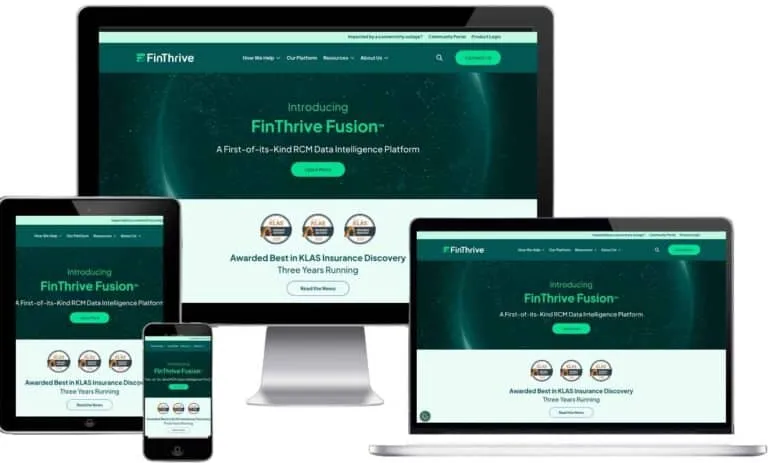
FinThrive
B2B Software | Magento Build
A hospital revenue-cycle platform whose site had to earn demo requests from careful buyers. Egochi ran the Magento build its published numbers restate, complex-build proof for the same team.
- 50% Bounce Rate Drop
- 40% Page Load Time Cut
- 300 Monthly Demo Requests
-
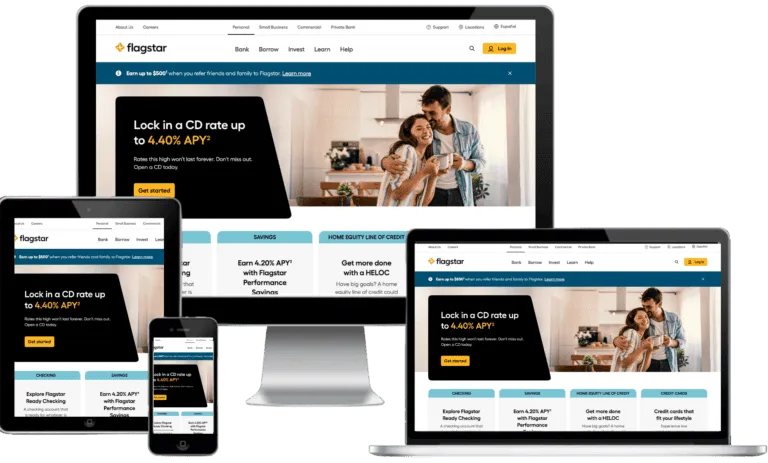
Flagstar
Commercial Bank | Branch Network
A commercial bank that needed accessibility and findability across a branch network, one brand serving many communities. Egochi handled the work its published portfolio numbers restate.
- +85% ADA Compliance Improvement
- +72% Organic Traffic Increase
- +80% Email Engagement Climb
See How Egochi Works
A short look at how our team plans, builds, and reports on client work.
Is This Right for You?
This is for you if
- Your location pages are copies of each other and none of them rank outside your strongest market.
- Adding new units to the site is slow enough that openings launch without a web presence.
- You inherited a mix of microsites and want one architecture without losing the rankings that exist.
This may not be the right fit if
- You need a franchise-development brochure site only; selling territories is a different build we scope separately.
- Your units are individually branded businesses with no shared identity; that calls for separate sites, honestly.
See the work: Web design case studies · Local SEO case studies
What Clients Tell Us
Working with Egochi transformed our lead generation. They understood our B2B sales cycle and created content that attracts decision-makers. Marketing qualified leads increased 250% and our sales team loves them.
The Complete Franchise Program
This page is one part of a five-part program. Each piece works alone and works better together.
-
Franchise Marketing Agency
One brand, many markets: system strategy with per-location execution.
-
Franchise SEO
Search visibility for every territory under one brand.
-
Franchise PPC Management
Territory-true campaigns where no unit pays for another's clicks.
-
Franchise Social Media Marketing
On-brand local pages fed by a shared content engine.
Common Questions About Franchise Websites
-
How much does a franchise website cost?
It scales with locations and the depth of the location-page system rather than raw page count. Egochi scopes builds alongside marketing programs starting at $1,500 monthly, and the free architecture review prices your specific system before any commitment.
-
How do AI assistants read a franchise website?
Google AI Overviews, ChatGPT, Gemini, and Perplexity answer nearest-location and hours questions from structured data: a real page per unit, per-location schema, and name, address, and hours that match each unit's profiles exactly. Egochi builds franchise architecture in that shape, so every unit is a fact the assistants can look up instead of a locator pin they cannot parse.
-
Should each franchise location have its own website?
Usually no. Separate domains split the authority that makes any of them rank, and most franchise microsites end up invisible. One domain with a strong, genuinely local page per unit outperforms in nearly every system Egochi has reviewed. The exceptions involve distinct brands, not convenience.
-
How fast can a new location get its page live?
On a well-built architecture, the week the agreement signs: the template exists, corporate fills structured fields, the unit supplies local photos and details, and the page publishes with schema and tracking already wired. If it takes a design project instead, the architecture is the problem.
-
How do we pick a web design company for a franchise system?
Ask what happens when unit forty-one signs: if adding a location means a design project, the architecture fails the first test. Ask how they settle the one-site-versus-microsites question, and expect evidence rather than preference. Ask about per-location schema, redirects for retired microsites, and page speed at hundreds of URLs. A portfolio of pretty single-location sites answers none of that.
Awards and Partnerships Egochi Holds in 2026
-

Egochi Named 2026 Top Digital Marketing Agency by Clutch
Clutch, a B2B market research and reviews platform, names Egochi a top digital marketing agency for 2026. The distinction rests on overall market presence and, most importantly, verified client feedback. Egochi holds a 5.0 rating across 190+ reviews on Clutch.
-

Egochi Is a Certified Google Premier Partner
Egochi is a certified Google Premier Partner, a status Google grants to the top 3% of participating advertising agencies each year. The tier is earned on campaign performance, sustained client growth, and advanced Google Ads certification, and Google reviews it annually rather than granting it for life.
The Team Behind the Work
-

Jobin John
Chief Executive Officer
-

Justin Brown
Head of Search Engine Optimization
-

Bryan Thomson
Head of Web Design & Development
-

Ina Komins
Head of Social Media Marketing
-

Kierra Pita
Head of Advertising & Content Marketing
-

Patricia Turner
Chief Creative Officer
-

William Carter
Chief Digital Strategy Officer
-

Andrew Miller
Senior SEO Strategist
-

Amy Robinson
Content Marketing Manager
-

Betty Harrison
PPC Campaign Specialist
-

Anthony Carter
Lead Digital Account Executive
-

Amanda Cooper
Social Media Director
-

Carol Parker
Senior Client Success Manager
-

Barbara Bennett
Email Marketing Lead
-

Charles Turner
Technical SEO Analyst
-

Brian Sullivan
Creative Director
-

Christine Walker
Director of Project Management
-

Christopher Brooks
Digital Marketing Strategist
-

Daniel Wright
Senior Analytics Specialist
-

David Henderson
Lead Content Strategist
-

Donna Mitchell
Client Communications Manager
-

Elizabeth Foster
Director of Paid Advertising
-

Emily Baredi
Brand Experience Specialist
-

Emma Scott
Social Media Content Creator
-

George Crawford
Technical Solutions Architect
-

Jacob Evans
Digital Content Coordinator
-

James Anderson
Marketing Automation Specialist
-

Jason Palmer
Junior Copywriter
-

Jeffrey Reynolds
Paid Media Analyst
-

Jennifer Lewis
Community Engagement Specialist
-

Jonathan Murphy
SEO Reporting Specialist
-

Joseph Morgan
Influencer Marketing Coordinator
-

Kenneth Stevens
Digital PR Manager
-

Kimberly Harper
Digital Marketing Intern
-

Kevin Morris
SEO Outreach Specialist
-

Lee Dawson
Junior Web Developer
-

Linda Peterson
Email Campaign Coordinator
-

Lisa Thompson
Social Media Ads Specialist
-

Margaret Bradley
Marketing Operations Lead
-

Mark Richards
Data & Insights Analyst
-

Mary Kennedy
Senior Copyeditor
-

Matthew Clark
Growth Marketing Manager
-

Michelle Sanders
Junior Marketing Designer
-

Michael Foster
Senior Conversion Rate Specialist
-

Nancy Wheeler
Digital Analytics Manager
-

Nicholas Pierce
Affiliate Marketing Specialist
-

Nicole Adams
Outreach Program Coordinator
-

Paul Franklin
Paid Social Campaign Manager
-

Richard Barnes
Reputation Management Specialist
-

Robert Murphy
Lead Solutions Architect
-

Ronald Davis
Marketing Technology Analyst
-

Ryan Bell
Paid Media Buyer
-

Sandra Gregory
Digital Account Coordinator
-

Scott Hopkins
CRM Implementation Specialist
-

Shirley Ellis
Customer Insights Manager
-

Stephanie Cross
Brand Content Designer
-

Steven Greene
Web Analytics Specialist
-

Susan Price
Affiliate Campaign Manager
-

Thomas Fisher
Lead Technical Architect
-

Timothy Nash
Mobile Marketing Strategist
Certified & Accredited


One Brand. One Domain. Every Location Found.
Tell us your unit count and how the current site handles locations. Egochi, a 5.0 rated agency across 190+ Clutch reviews, shows which pages rank, which are invisible, and what the fix costs.
Egochi Stats
- $200M+ Client Revenue Generated
- 500+ Clients Served
- 250+ Google Reviews
- 190+ Clutch Reviews
- 12+ Years in Business
- 60+ Team Members
- 150+ Websites Delivered
- Premier Google Partner
Blog Posts
- Sep 27, 2026 Google September 2026 Spam Update Rolls Out Worldwide
- Aug 12, 2026 GEO vs. SEO: A Comparative Guide for Digital Marketers
- Aug 12, 2026 What is llms.txt? | How to Create llms.txt file for your website
- Aug 12, 2026 What is Semantic SEO? | How to Build Topical Authority That Ranks
- Aug 12, 2026 What is Schema Markup? | How to Add Structured Data to Your Website