Multi-Location Website Design
Egochi designs websites for companies with many branches under one owner, starting with the question every multi-location business eventually asks: one site or one per location? The evidence answers it in most cases. A single domain compounds the authority every branch draws on, while separate sites split it into pieces too small to rank; the real work is location pages good enough to deserve that authority. Egochi builds pages that read like someone has stood in that branch, with per-location schema, hours, booking paths, and reviews, on an architecture where the next location is a content entry, not a redesign. Builds pair with multi-location marketing plans from $1,500 monthly. Start with a free architecture review.
Get Your Free Site Architecture Review See What's Included
- 250+ Google Reviews
- 190+ Clutch Reviews at 5.0
- Google Premier Partner
As Featured In






What Makes Multi-Location Web Design Different
Four decisions Egochi settles early because they determine whether every branch gets found and chosen.
One domain, honestly argued
Separate sites per branch feel autonomous and rank like strangers, because domain authority does not transfer between them. One domain with strong location pages wins in most systems Egochi has measured. The exceptions are real (distinct brands, different services entirely) and should be proven, not assumed.
Location pages must feel lived-in
Search engines and customers have both learned to spot find-and-replace town names. Pages that perform carry what only that branch knows: the team, the neighborhoods it actually serves, its parking quirks, its reviews. Egochi wires that content structure into the build, rather than leaving it to good intentions after launch.
The architecture is tested by branch N+1
Any agency can hand-build ten location pages. The question is what happens at branch twenty-six: on an architecture Egochi builds, a structured content entry publishes an on-brand, rankable page with schema and tracking wired, the same week the lease signs.
Each branch needs its own conversion path
A shared contact form that routes everything to headquarters loses the customer who wanted the Elm Street office. Per-location calls, bookings, and direction taps, tracked separately, make each page accountable for the branch it represents.
What's Inside a Multi-Location Website Build
Egochi delivers one design system, one domain, and a rankable page for every branch.
-
Unified Design System
Egochi builds brand-consistent components across the whole site, with structured content lanes that keep every location page distinct.
-
Location Page Architecture
Egochi gives every branch a dedicated, rankable page: local content fields, service areas, team, reviews, hours, and directions.
-
Local SEO Foundations
Egochi wires per-branch schema, clean URLs, and Google Business Profile alignment so map listings and site pages reinforce each other.
-
Scale-Ready Publishing
Egochi sets up structured entries with review steps, so new branches launch without design projects and the site stays current.
-
Per-Branch Conversion Paths
Egochi routes each page to its own branch: right phone number, right booking calendar, right address, tracked separately.
-
Performance at Scale
Egochi ships static-fast delivery across every location URL, because branch pages serve mobile visitors who are often already in the car.
Multi-Location Sites Are What AI Assistants Read
When a customer asks Google AI Overviews, ChatGPT, Gemini, or Perplexity for the nearest branch, its hours, or whether a brand serves their suburb, the assistant reads structured location data to answer. A site with one address in the footer has nothing to offer it. Egochi builds location architecture those systems can parse: a real page per branch, per-location schema, and data that matches every profile.
Google AI OverviewsChatGPTGeminiPerplexity
-
A page per branch is an answer per branch
Assistants cite pages that describe one place cleanly: services at that address, hours, directions, the team. The location pages Egochi builds are structured exactly that way, which is why the same page wins classic local rankings and AI citations together.
-
Schema is the language assistants trust
Per-location structured data, consistent name, address, and phone details, and Google Business Profile alignment are how ChatGPT and Gemini connect a branch to a map result. Egochi wires that markup into the location template, so every new branch publishes AI-legible from day one.
-
Hours and data that never disagree
An assistant that finds two different closing times for one branch stops recommending it. Egochi keeps site, schema, and profile data synchronized per location, so Perplexity and AI Overviews always find one version of the truth.
-
The build serves Google and AI at once
There is no separate AI website. The lived-in location pages, per-branch schema, and fast delivery Egochi builds for rankings are the same assets the answer engines quote, so the investment reports as one visibility program.
How a Multi-Location Build Runs
-
Architecture review
Egochi audits what exists: which location URLs rank, which pages are duplicates in disguise, and whether separate sites are helping or splitting you. The one-site question gets answered with your ranking data.
-
Location content model
Before design, Egochi defines the structured fields every branch page carries: team, services at that address, service area, directions, reviews. This model is what keeps page fifty as distinct as page one.
-
Design system build
Components get designed once and assembled per location, so brand consistency and local difference stop being a tradeoff. Schema, tracking, and conversion paths are wired into the template, not added after.
-
Migration and launch
If old sites or URLs exist, every one gets a mapped redirect, and rankings are watched through the cutover. Launches are staged so a problem in one market never risks the whole footprint.
-
Branch onboarding runbook
Egochi hands over the process that turns a signed lease into a live, rankable page: the content checklist, who fills what, and how long each step takes.
The Questions Behind the One-Site Debate
Our branches want their own websites. Should we let them?
The wish is usually for identity and control, and both are solvable inside one domain: a branch page with its own team, photos, reviews, and phone number gives a location its face without forfeiting shared authority. The measurable costs of separate sites, weaker rankings everywhere and multiplied maintenance, land on the company, not on the branch that asked.
Is a custom build worth it over a template with a locations tab?
A locations tab with an address list satisfies nobody: not the searcher who wants their branch, not the search engine looking for a rankable page per city. Whether the build is custom or platform-based matters less than the location page system itself. Buy the architecture; the rest is preference and budget.
We have ten sites already. Is consolidation risky?
Done casually, yes: dropped redirects and deleted content are how consolidations bleed rankings. Done the way Egochi runs it, with a page-level redirect map and content carried over rather than trimmed, the combined domain holds what the pieces earned and puts it behind every branch at once. The risk is real and manageable, and the plan should exist in writing before anything moves.
How fast can we add a location after launch?
On the architecture Egochi builds, the constraint is content collection, not development: once a branch supplies its team, photos, and local details, publishing is a review step measured in days. Companies adding several locations a year feel this most, because every launch that once waited on a web project now waits only on a checklist.
Common Mistakes to Avoid
-
Buying design first and treating the location page system as something to art-direct later, which is backwards.
-
Migrating to one domain without redirecting every old URL, then attributing the ranking drop to the new design.
-
Letting branches edit their pages freely with no structure, until half the footprint drifts off-brand and out of date.
-
Listing addresses on one locations page instead of giving each branch a page that can rank and convert.
-
Choosing a platform nobody on staff can publish to, so new branches wait weeks for an outside developer.
Multi-Location Website Case Studies
Egochi publishes these receipts from build and search engagements for brands with many properties, stores, and branches. Every number restates the client's published case study, and the multi-location work leads the row.
-
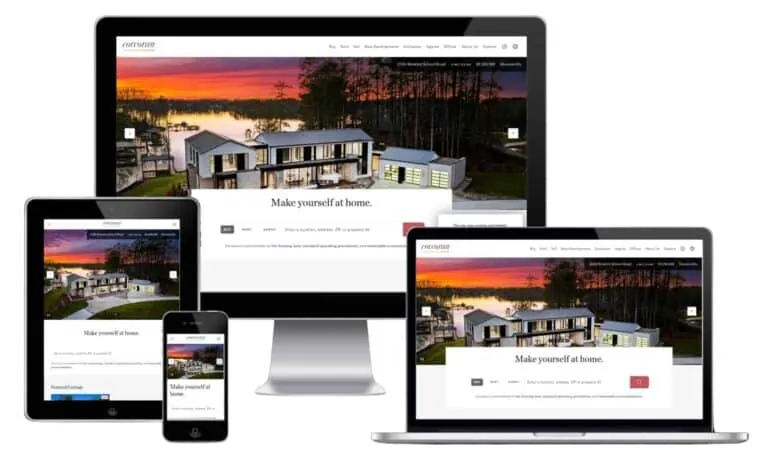
Corcoran Group
Real Estate Brokerage | New York
A brokerage with offices across New York submarkets, where site speed and search architecture had to serve every office at once. Egochi rebuilt both, per the published figures here.
- 3.4s → 2.1s Largest Contentful Paint
- 340ms → 195ms Interaction to Next Paint
- +120% Organic Traffic Lift
-
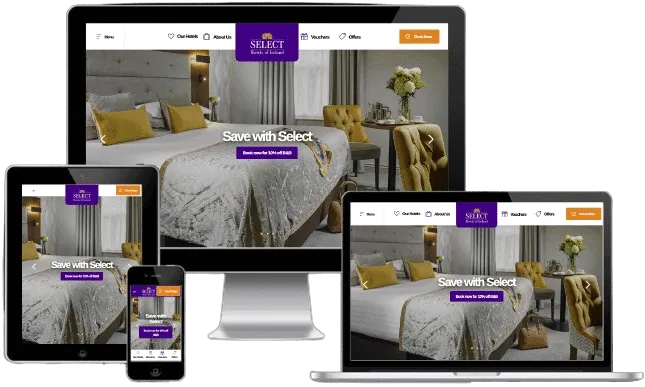
SELECT Hotels
Hotel Group | Web Design & Booking
A hotel group that needed one site to present multiple properties and take bookings for all of them. Egochi built the custom CMS and booking experience its published numbers restate.
- +70% Inquiry Surge
- +55% Booking Conversion Lift
- +65% User Satisfaction Rise
-
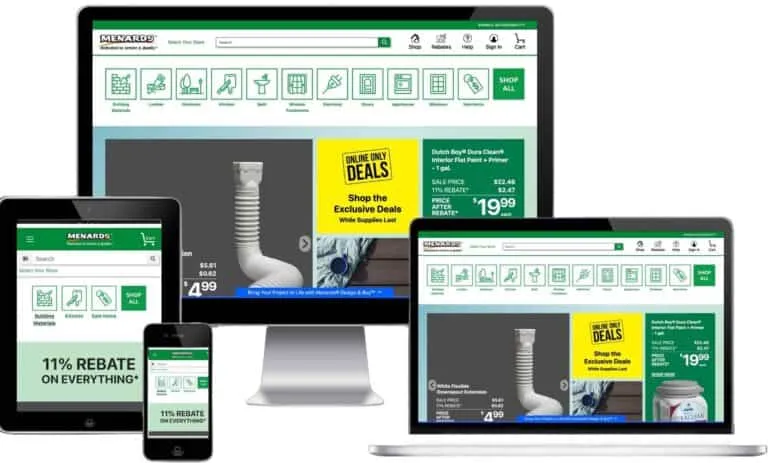
Menards
Home Improvement Retail | National
A national retail brand whose site carries an enormous footprint of products and stores. Egochi ran the web and search work these published numbers restate, enterprise proof for the architecture-first method.
- +245% Traffic Increase
- +180% Conversions
- 2.3s Load Speed
-
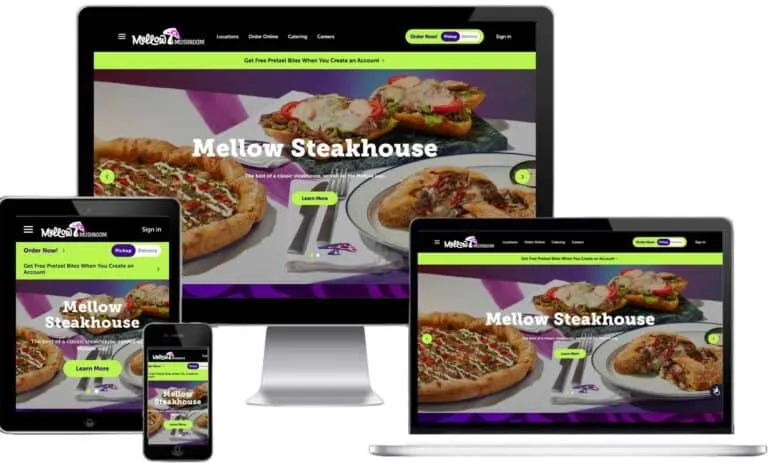
Mellow Mushroom
Restaurant Chain | Local Visibility
A pizza chain whose store pages had to convert neighbors, not just describe the brand. Egochi ran the local program these numbers restate, the demand side every location build serves.
- +90% User Engagement Increase
- +245% Online Orders Increase
- +312% Local Traffic Growth
-
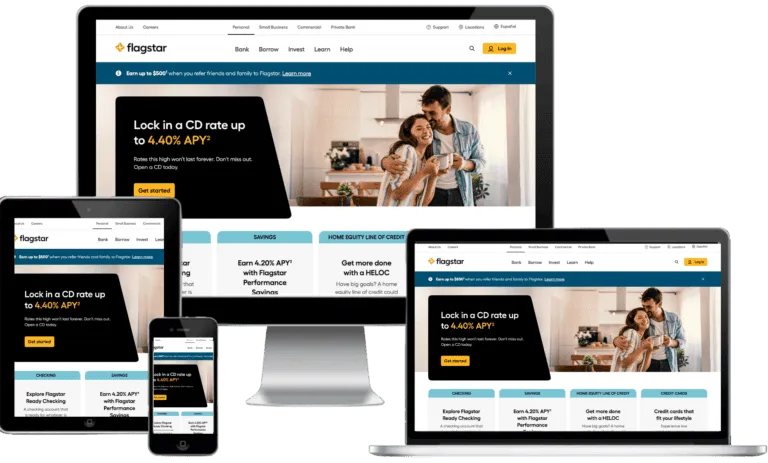
Flagstar
Commercial Bank | Branch Network
A commercial bank that needed accessibility and findability across a branch network. Egochi handled the work its published portfolio numbers restate, regulated-industry proof for the same build discipline.
- +85% ADA Compliance Improvement
- +72% Organic Traffic Increase
- +80% Email Engagement Climb
-
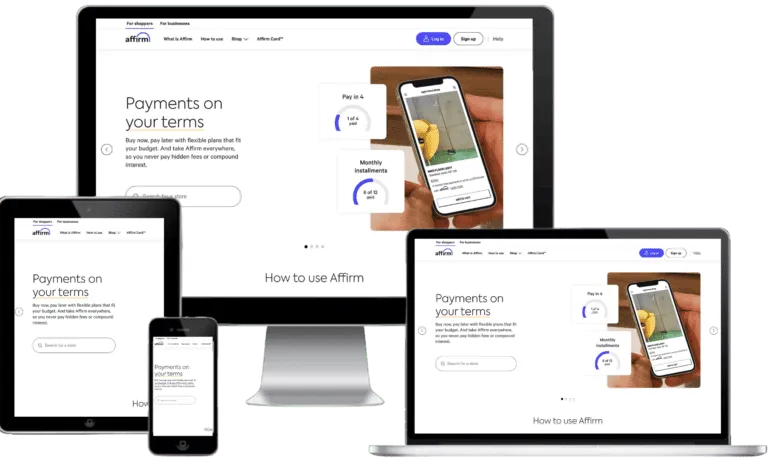
Affirm Holdings
Fintech | Custom ADA Build
A roster receipt from fintech: Egochi built the custom ADA-compliant site its published numbers restate, the same accessibility and conversion standards every location build ships with.
- +74% Organic Traffic Increase
- +80% User Engagement Improvement
- +68% Conversion Rate Lift
See How Egochi Works
A short look at how our team plans, builds, and reports on client work.
Is This Right for You?
This is for you if
- Your branches live on lookalike pages that rank nowhere outside your home market.
- You maintain several separate sites and none of them has the authority to compete.
- You are adding locations and every launch currently waits on a web project.
This may not be the right fit if
- Your locations operate as genuinely different brands with different services; forcing one site would confuse more than it compounds.
- You need a franchise system with per-owner governance; that build lives at /franchise-marketing-agency/.
See the work: Web design case studies · Local SEO case studies
What Clients Tell Us
Property owners looking for management companies find us online now. Egochi understood our B2B model and created content that attracts the right property owners. Portfolio has grown 40% this year.
The Complete Multi-Location Program
This page is one part of a five-part program. Each piece works alone and works better together.
-
Multi-Location Marketing Agency
Strategy at both levels: every branch local, the brand compounding.
-
Multi-Location SEO
Location-page architecture that stops your branches competing with each other.
-
Multi-Location PPC
Geo-fenced campaigns and budgets that follow market opportunity.
-
Multi-Location Social Media
Branch-real content at scale, with review response across every office.
Common Questions About Multi-Location Websites
-
Should a multi-location business have one website or several?
One domain in most cases: authority compounds instead of splitting, management stays sane, and every branch draws on the brand's strength. Separate sites make sense only when locations are effectively different businesses. Egochi settles it with ranking data from your market, not preference.
-
How much does a multi-location website cost?
Cost scales with branch count and the depth of the location-page system. Egochi scopes builds alongside marketing plans from $1,500 monthly, and the free architecture review prices your specific situation, including what migrating from separate sites would involve.
-
How do AI assistants read a multi-location website?
Google AI Overviews, ChatGPT, Gemini, and Perplexity answer nearest-location and hours questions from structured data: a page per branch, per-location schema, and name, address, and hours that match the brand's profiles exactly. Egochi builds location architecture in that shape, so every branch is a fact the assistants can look up rather than a pin on a locator map they cannot parse.
-
Can we move from separate sites to one without losing rankings?
Yes, with a migration plan: page-by-page redirects from every old URL, content consolidated rather than deleted, and rankings watched through the transition. The consolidated domain usually ends up stronger than the sum of the parts, but the redirect work is where Egochi wins that outcome.
-
How do we pick a web design agency for a multi-location business?
Ask how they would settle the one-site-or-many question, and expect an answer grounded in your ranking data rather than preference. Ask to see their location content model, how a new branch page gets published after launch, and the redirect plan for any migration. An agency that offers a locations tab with an address list has not solved this problem before.
Awards and Partnerships Egochi Holds in 2026
-

Egochi Named 2026 Top Digital Marketing Agency by Clutch
Clutch, a B2B market research and reviews platform, names Egochi a top digital marketing agency for 2026. The distinction rests on overall market presence and, most importantly, verified client feedback. Egochi holds a 5.0 rating across 190+ reviews on Clutch.
-

Egochi Is a Certified Google Premier Partner
Egochi is a certified Google Premier Partner, a status Google grants to the top 3% of participating advertising agencies each year. The tier is earned on campaign performance, sustained client growth, and advanced Google Ads certification, and Google reviews it annually rather than granting it for life.
The Team Behind the Work
-

Jobin John
Chief Executive Officer
-

Justin Brown
Head of Search Engine Optimization
-

Bryan Thomson
Head of Web Design & Development
-

Ina Komins
Head of Social Media Marketing
-

Kierra Pita
Head of Advertising & Content Marketing
-

Patricia Turner
Chief Creative Officer
-

William Carter
Chief Digital Strategy Officer
-

Andrew Miller
Senior SEO Strategist
-

Amy Robinson
Content Marketing Manager
-

Betty Harrison
PPC Campaign Specialist
-

Anthony Carter
Lead Digital Account Executive
-

Amanda Cooper
Social Media Director
-

Carol Parker
Senior Client Success Manager
-

Barbara Bennett
Email Marketing Lead
-

Charles Turner
Technical SEO Analyst
-

Brian Sullivan
Creative Director
-

Christine Walker
Director of Project Management
-

Christopher Brooks
Digital Marketing Strategist
-

Daniel Wright
Senior Analytics Specialist
-

David Henderson
Lead Content Strategist
-

Donna Mitchell
Client Communications Manager
-

Elizabeth Foster
Director of Paid Advertising
-

Emily Baredi
Brand Experience Specialist
-

Emma Scott
Social Media Content Creator
-

George Crawford
Technical Solutions Architect
-

Jacob Evans
Digital Content Coordinator
-

James Anderson
Marketing Automation Specialist
-

Jason Palmer
Junior Copywriter
-

Jeffrey Reynolds
Paid Media Analyst
-

Jennifer Lewis
Community Engagement Specialist
-

Jonathan Murphy
SEO Reporting Specialist
-

Joseph Morgan
Influencer Marketing Coordinator
-

Kenneth Stevens
Digital PR Manager
-

Kimberly Harper
Digital Marketing Intern
-

Kevin Morris
SEO Outreach Specialist
-

Lee Dawson
Junior Web Developer
-

Linda Peterson
Email Campaign Coordinator
-

Lisa Thompson
Social Media Ads Specialist
-

Margaret Bradley
Marketing Operations Lead
-

Mark Richards
Data & Insights Analyst
-

Mary Kennedy
Senior Copyeditor
-

Matthew Clark
Growth Marketing Manager
-

Michelle Sanders
Junior Marketing Designer
-

Michael Foster
Senior Conversion Rate Specialist
-

Nancy Wheeler
Digital Analytics Manager
-

Nicholas Pierce
Affiliate Marketing Specialist
-

Nicole Adams
Outreach Program Coordinator
-

Paul Franklin
Paid Social Campaign Manager
-

Richard Barnes
Reputation Management Specialist
-

Robert Murphy
Lead Solutions Architect
-

Ronald Davis
Marketing Technology Analyst
-

Ryan Bell
Paid Media Buyer
-

Sandra Gregory
Digital Account Coordinator
-

Scott Hopkins
CRM Implementation Specialist
-

Shirley Ellis
Customer Insights Manager
-

Stephanie Cross
Brand Content Designer
-

Steven Greene
Web Analytics Specialist
-

Susan Price
Affiliate Campaign Manager
-

Thomas Fisher
Lead Technical Architect
-

Timothy Nash
Mobile Marketing Strategist
Certified & Accredited


One Domain. Every Branch Findable and Chosen.
Tell us your locations and how the current site handles them. Egochi, a 5.0 rated agency across 190+ Clutch reviews, shows what ranks, what is invisible, and the shortest path to fixing it.
Egochi Stats
- $200M+ Client Revenue Generated
- 500+ Clients Served
- 250+ Google Reviews
- 190+ Clutch Reviews
- 12+ Years in Business
- 60+ Team Members
- 150+ Websites Delivered
- Premier Google Partner
Blog Posts
- Sep 27, 2026 Google September 2026 Spam Update Rolls Out Worldwide
- Aug 12, 2026 GEO vs. SEO: A Comparative Guide for Digital Marketers
- Aug 12, 2026 What is llms.txt? | How to Create llms.txt file for your website
- Aug 12, 2026 What is Semantic SEO? | How to Build Topical Authority That Ranks
- Aug 12, 2026 What is Schema Markup? | How to Add Structured Data to Your Website