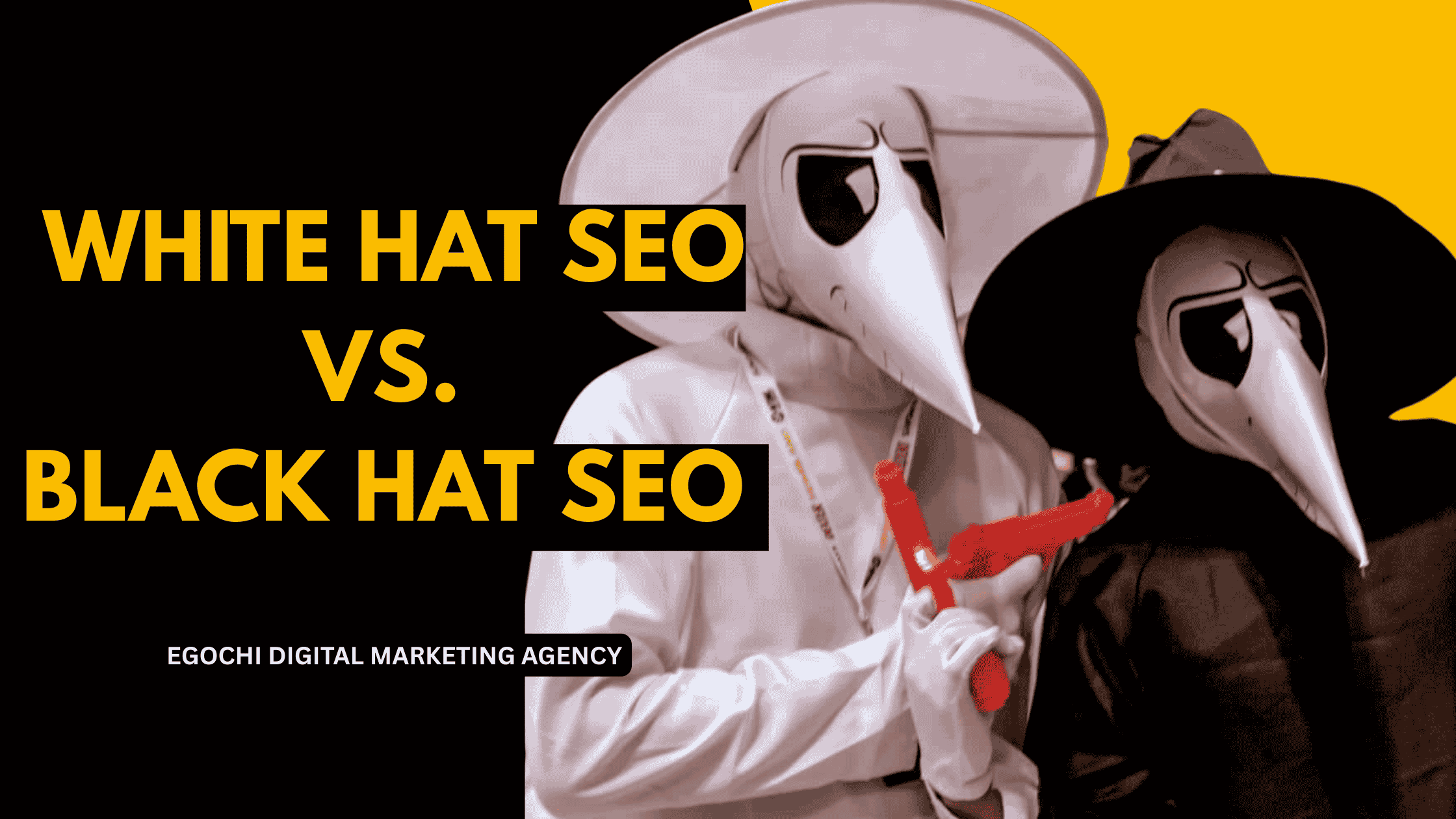
White hat SEO uses ethical tactics that follow search engine guidelines to improve rankings, while black hat SEO uses manipulative techniques that violate guidelines and risk penalties. White hat focuses on quality content, natural link building, and user experience for sustainable long-term results. Black hat pursues quick wins through tactics like keyword stuffing, link schemes, and cloaking, but risks manual penalties, ranking drops, or complete de-indexing from Google.
This guide explains the key differences between white hat and black hat SEO, covers specific tactics in each category, discusses risks and penalties, and helps you choose the right approach for your website.
Key Takeaways: White Hat vs Black Hat SEO
- White hat = sustainable: Follows guidelines, builds lasting rankings, no penalty risk
- Black hat = risky: May work short-term but risks severe Google penalties
- Gray hat exists: Tactics in the middle that push boundaries without clearly violating rules
- Penalties are real: Google issues manual actions that can devastate organic traffic
- Focus on users: Google rewards sites that genuinely help users, not those gaming the system
White Hat vs Black Hat SEO: Quick Comparison
- Quality content creation
- Natural link building
- On-page optimization
- Mobile optimization
- Site speed improvement
- Schema markup
- Keyword stuffing
- Link schemes/buying links
- Cloaking
- Hidden text
- Private blog networks
- Content scraping
Egochi, America’s #1 digital marketing agency headquartered in New York City, practices only white hat SEO techniques. From our offices in NYC, Milwaukee, Madison, and Miami, we build sustainable rankings through quality content, ethical link building, and technical excellence.
What is the difference between white hat and black hat SEO?
White hat SEO follows search engine guidelines using ethical tactics like quality content and natural links, while black hat SEO violates guidelines using manipulative tactics like keyword stuffing and link schemes. White hat builds sustainable rankings over time with no penalty risk. Black hat may achieve quick results but risks severe penalties including complete removal from search results. The fundamental difference is whether you’re optimizing for users (white hat) or trying to trick search engines (black hat).
What is white hat SEO?
White hat SEO is the practice of improving search rankings using ethical techniques that comply with search engine guidelines and focus on providing value to users. This includes creating quality content, earning natural backlinks, optimizing on-page elements, improving site speed, and ensuring good user experience. White hat SEO is the only approach recommended by Google and the only sustainable long-term strategy.
What is black hat SEO?
Black hat SEO is the practice of using manipulative tactics that violate search engine guidelines to artificially boost rankings. Common black hat techniques include keyword stuffing, buying links, cloaking (showing different content to users vs. search engines), hidden text, and private blog networks (PBNs). While these tactics may provide short-term ranking gains, they risk manual penalties, algorithmic demotions, or complete de-indexing from Google.
✅ White Hat SEO
Definition: Ethical SEO practices that follow search engine guidelines and prioritize user experience.
- Creates genuine value for users
- Follows Google’s Webmaster Guidelines
- Builds rankings that last years
- Zero risk of penalties
- Improves overall website quality
- Attracts natural, editorial links
- Takes 3-12 months to see results
❌ Black Hat SEO
Definition: Manipulative tactics that violate guidelines to artificially inflate rankings.
- Tries to trick search engines
- Violates Google’s guidelines
- Rankings can disappear overnight
- High risk of severe penalties
- Often degrades user experience
- Relies on artificial link schemes
- May work quickly but won’t last
Table of Contents
White Hat SEO Tactics
These are ethical SEO practices that Google explicitly recommends. They focus on creating a great website that users love.
Quality Content Creation
SafeCreate original, in-depth content that answers user questions and provides genuine value. Follow E-E-A-T principles by demonstrating experience, expertise, authoritativeness, and trustworthiness. Quality content attracts natural links and engagement.
Natural Link Building
SafeEarn backlinks through great content, guest posting on relevant sites, digital PR, and building genuine relationships. Focus on quality over quantity. One link from an authoritative site beats dozens of low-quality links.
On-Page Optimization
SafeOptimize title tags, meta descriptions, headers, and content for target keywords naturally. Use descriptive URLs, optimize images with alt text, and implement schema markup for rich results.
Mobile Optimization
SafeEnsure your site works perfectly on mobile devices with responsive design, fast loading, and touch-friendly navigation. Google uses mobile-first indexing, making mobile optimization essential for rankings.
Site Speed Optimization
SafeImprove page load times by optimizing images, enabling caching, minimizing code, and using a CDN. Core Web Vitals directly impact rankings and user experience.
Internal Linking
SafeConnect related pages with descriptive internal links to help users and search engines navigate your site. Build topic clusters that establish topical authority.
User Experience Focus
SafeDesign for users first with clear navigation, readable content, accessible design, and fast performance. Sites that satisfy users tend to rank better because Google measures user signals.
Regular Content Updates
SafeKeep content fresh and accurate by updating statistics, adding new information, and improving existing pages. Outdated content can lose rankings to newer, more relevant competitors.
The best white hat strategy is to build something genuinely useful. Ask yourself: “Would this page exist if search engines didn’t?” If your content only exists to rank for keywords, it’s unlikely to provide lasting value. Focus on solving real problems for real people.
Black Hat SEO Tactics
These tactics violate Google’s guidelines and risk penalties. We explain them so you can recognize and avoid them, not to encourage their use.
Keyword Stuffing
High RiskUnnaturally cramming keywords into content, meta tags, or hidden areas. Makes content unreadable and signals manipulation to Google. Modern algorithms easily detect this outdated tactic.
Buying Links
High RiskPaying for backlinks that pass PageRank violates Google’s guidelines. This includes paid guest posts, link farms, and private blog networks. Google’s algorithms and manual review team actively hunt paid links.
Cloaking
High RiskShowing different content to search engines than to users. This includes serving keyword-optimized pages to Googlebot while showing something else to visitors. One of the most serious violations.
Hidden Text
High RiskHiding keywords using white text on white backgrounds, tiny font sizes, or CSS positioning off-screen. Designed to manipulate rankings without users seeing the spam. Easily detected.
Private Blog Networks (PBNs)
High RiskCreating or buying a network of websites solely to link to your main site. Google actively identifies and devalues PBN links. When discovered, both the PBN and target sites can be penalized.
Content Scraping
High RiskCopying content from other websites without adding value. Duplicate content doesn’t rank well, and scraping can result in DMCA takedowns and penalties for thin or duplicate content.
Doorway Pages
High RiskCreating low-quality pages optimized for specific keywords that funnel users to a different page. Often used to target multiple locations or variations without unique content.
Link Schemes
High RiskAny pattern of links intended to manipulate PageRank, including excessive link exchanges, automated link building, and links from low-quality directories or article sites created solely for links.
⚠ Warning: Black Hat Penalties Are Severe
Google penalties can drop your organic traffic by 90% or more, sometimes permanently. Recovery requires identifying and removing all violations, then waiting months for a reconsideration request to be reviewed. Many sites never fully recover. The short-term gains from black hat SEO are never worth the long-term risk.
SEO Tactics Risk Spectrum
⚪ What About Gray Hat SEO?
Gray hat SEO refers to tactics that aren’t explicitly against guidelines but push ethical boundaries. These tactics carry moderate risk and may become black hat as Google updates its guidelines.
- Guest posting primarily for links: Guest posting for exposure is fine; doing it solely for links is questionable
- Aggressive anchor text optimization: Some optimization is expected, but over-optimization looks manipulative
- Expired domain redirects: Buying domains for their backlinks and redirecting to your site
- Tiered link building: Building links to pages that link to you rather than directly
- Automated outreach at scale: Mass-sending templated link requests
Our recommendation: Avoid gray hat tactics. If you have to ask whether something is okay, it probably isn’t. Stick to clearly white hat strategies.
Google Penalties Explained
Google penalizes black hat SEO through both algorithmic actions (automatic) and manual actions (human review).
⚠ Types of Google Penalties
Penalties range from partial ranking drops to complete removal from search results.
Manual Action
A human reviewer at Google identifies a violation and applies a penalty. You’ll see a notification in Google Search Console. Requires fixing the issue and submitting a reconsideration request.
Algorithmic Demotion
Google’s algorithms automatically detect violations and lower rankings. No notification is given. Fixing the issue should eventually restore rankings as Google recrawls.
Partial Penalty
Specific pages or sections are penalized while the rest of the site remains unaffected. Often applies to thin content or unnatural links to specific pages.
Site-Wide Penalty
The entire domain is penalized, dramatically reducing visibility across all pages. Usually results from serious or widespread violations.
White Hat vs Black Hat SEO Comparison
| Factor | White Hat SEO | Black Hat SEO |
|---|---|---|
| Risk Level | None | Very High |
| Time to Results | 3-12 months | Days to weeks |
| Longevity | Years (sustainable) | Temporary (until caught) |
| Google Guidelines | Follows completely | Violates intentionally |
| User Experience | Prioritized | Often degraded |
| Recovery if Penalized | N/A (won’t be penalized) | 6-12+ months, not guaranteed |
| Cost | Higher upfront investment | Cheaper short-term, costly long-term |
| Brand Impact | Builds trust and authority | Risks reputation damage |
☑ White Hat SEO Checklist
Follow these practices to build sustainable rankings safely
Content
- ☐ Create original, in-depth content that serves user intent
- ☐ Target keywords naturally without stuffing
- ☐ Update and improve existing content regularly
- ☐ Demonstrate E-E-A-T (Experience, Expertise, Authority, Trust)
On-Page SEO
- ☐ Write compelling, keyword-relevant title tags
- ☐ Create descriptive meta descriptions
- ☐ Use proper heading hierarchy (H1, H2, H3)
- ☐ Optimize images with alt text and compression
- ☐ Implement schema markup where appropriate
Technical SEO
- ☐ Ensure fast page load times
- ☐ Make site fully mobile-responsive
- ☐ Use HTTPS for security
- ☐ Submit XML sitemap to Search Console
- ☐ Fix crawl errors and broken links
Link Building
- ☐ Earn links through quality content
- ☐ Guest post on relevant, quality sites
- ☐ Build genuine industry relationships
- ☐ Disavow toxic backlinks if necessary
- ☐ Never buy or exchange links for rankings
People Also Ask About White Hat and Black Hat SEO
Is black hat SEO illegal?
Black hat SEO is not illegal in the criminal sense, but it violates search engine terms of service and can result in penalties. Your site won’t be subject to legal prosecution for keyword stuffing or link schemes. However, Google can remove your site from search results entirely. Some black hat tactics like content scraping may also violate copyright laws.
How do I know if my SEO is white hat?
Your SEO is white hat if you’d be comfortable explaining every tactic to a Google employee. Ask yourself: Does this help users? Would my site exist without search engines? Am I being transparent? If you’re hiding what you’re doing or gaming the system, it’s likely not white hat. Google’s Search Essentials outline exactly what’s acceptable.
Can you recover from a Google penalty?
Yes, you can recover from most Google penalties, but it takes significant effort and 6-12+ months. For manual actions, you must identify all violations, fix them completely, and submit a reconsideration request. Algorithmic penalties recover automatically once issues are fixed and Google recrawls. Some sites never fully recover their previous rankings.
Why do people still use black hat SEO?
Some people use black hat SEO because it can produce quick results for short-term gains. Affiliate marketers, spam sites, or those in very competitive niches may not care about long-term sustainability. Others don’t understand the risks or believe they won’t get caught. The potential quick wins tempt those who prioritize immediate results over lasting success.
What is negative SEO?
Negative SEO is using black hat tactics against a competitor’s website to harm their rankings. This includes building spammy links to their site, scraping and duplicating their content, or hacking their site. Google claims their algorithms can mostly ignore such attacks, and the disavow tool helps site owners combat unwanted links.
Ethical SEO Services from Egochi
Egochi, America’s #1 digital marketing agency headquartered in New York City, provides 100% white hat SEO services that build sustainable rankings.
No Shortcuts: We never use black hat tactics that put your site at risk. Our strategies follow Google’s guidelines completely, protecting your investment and brand reputation.
Proven Results: White hat SEO takes longer but delivers lasting results. Our clients see sustained traffic growth that compounds year over year.
Full Transparency: You’ll know exactly what we’re doing and why. We provide detailed reporting on all activities and results through transparent performance tracking.
Complete Service: From technical SEO to content marketing to link building, we handle every aspect of ethical SEO from our offices in NYC, Milwaukee, Madison, and Miami.
Ready for Sustainable SEO Growth?
Get a free SEO audit from Egochi. We’ll show you how white hat strategies can grow your organic traffic safely.
Get Free SEO AuditOr call (888) 644-7795
































Comments are closed.