Egochi Proprietary Tools
Egochi Reporter Puts Every Performance Number in One Readable Report
Egochi Reporter is our reporting system for clients who want to know what the work produced without learning five analytics platforms. Marketing performance lives scattered across Search Console, GA4, rank trackers, call tracking, and business profiles, and most agencies either dump raw exports on you or hide behind a dashboard you never open. Reporter combines every source into one report built to be read: what moved, why it moved, what it earned you, and what happens next month. Then we walk through it with you live, because a report nobody explains is a receipt, not reporting.
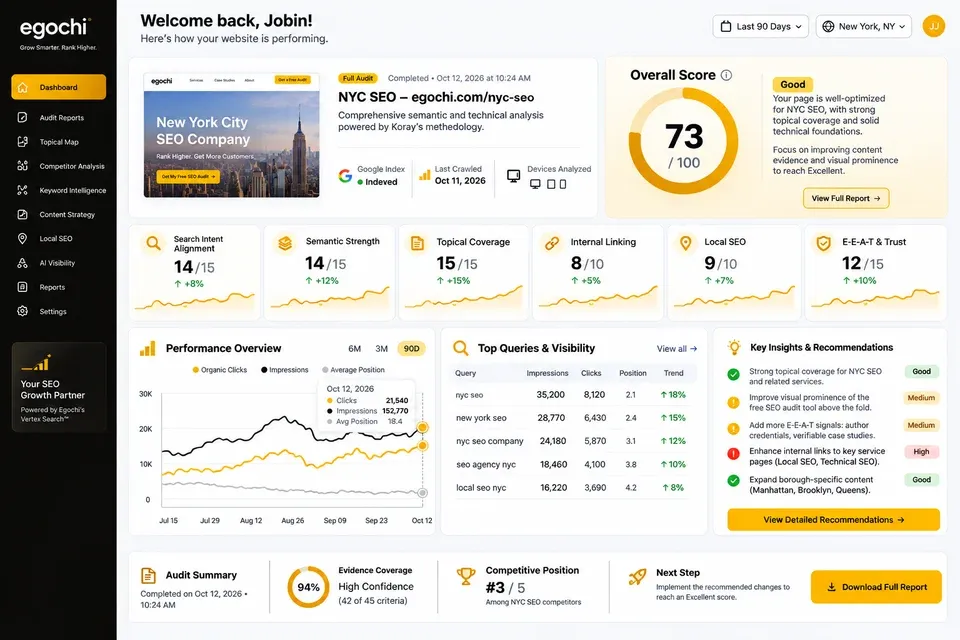
Six Sources In, One Report Out
What flows into Reporter every month, and what each source contributes.
- Google Search Console queries, clicks, impressions, index health
- Google Analytics 4 sessions, conversions, revenue attribution
- Rank tracking positions for your target keywords over time
- CallRail calls, sources, and recordings tied to campaigns
- Google Business Profile Map Pack views, calls, direction requests
- Campaign data links earned, content shipped, work completed
Your Monthly Report
- What moved, in plain language
- What it earned: leads, calls, revenue
- The work completed, listed
- Honest notes, including declines
- Next month's priorities, in writing
What Egochi Reporter Does
One report, assembled from every system your campaign touches.
-
All Sources, One View
Rankings, organic traffic, conversions, calls, and Map Pack activity assembled into one document, so the month’s story reads in order instead of across five logins.
-
Tied to Leads and Revenue
Every metric is framed by what it earned: the calls, forms, and revenue the visibility produced. Impressions are context; the business numbers are the point.
-
Written in Plain Language
Each section says what changed and why in sentences, not chart dumps. If a number fell, the report says so and says what we are doing about it.
-
Work Shown Beside Results
The pages shipped, links earned, and fixes made are listed next to the movement, so you can hold the work against the outcome, month after month.
-
Walked Through Live
Every report comes with a call. You ask questions while the recommendations go in, and the team on the call is the team doing the work.
-
Feeds the Next Month
What performed gets more budget, what stalled gets rebuilt. The report is not the end of the month; it is the input to the next one.
How Reporter Runs Every Month
The same cycle on every engagement, so no month goes unexplained.
-
Pull every source
Search Console, GA4, rank tracking, CallRail, and Google Business Profile data come in for the period, from accounts you own, so the numbers are yours to verify.
-
Reconcile and attribute
The sources get tied together: which queries drove which sessions, which pages produced which calls, and what the paid and organic channels each contributed.
-
Write the story
The month gets written up in plain language: movement, causes, work completed, and the honest notes, including anything that went backward.
-
Review it live
We walk the report with you, answer questions, and agree on the next month’s priorities, which go in writing at the top of the next report.
What should an SEO report include?
Four things: the movement (rankings, traffic, visibility), the business outcome (leads, calls, revenue), the work completed that month, and the plan for the next one. A report missing any of the four is hiding something, usually the connection between what you paid for and what it produced.
How do you attribute leads to SEO?
Through the systems built for it: GA4 conversion events for forms and purchases, CallRail for phone calls with their source recorded, and Google Business Profile Insights for local actions. Attribution is never perfect, and the report says so where it matters, but tying each lead to its source beats guessing.
How often should SEO be reported?
Monthly, with a live walkthrough. Weekly reporting on SEO mostly measures noise, and quarterly reporting hides problems for too long. A monthly cycle matches how rankings actually move, and the live call is where questions get answered while the next month is still shapeable.
Included in Every Engagement, Built on Your Accounts
Reporter is how every Egochi engagement reports, from local campaigns to the full SEO services program. The data comes from accounts in your name: your Search Console, your GA4, your call tracking. If we ever parted ways, every number stays yours.
Inside the EGOCHI VERTEX™ methodology, Reporter closes the loop: the system defines the work, and Reporter shows what it produced, in the same format, every month, so any month can be held against the plan.
Is Egochi Reporter Right for You?
This is for you if
- You have been burned by agencies whose reporting was a dashboard link and an invoice, and you want the month explained in sentences.
- You answer to someone: a partner, a board, a budget owner, and you need a report you can forward without translating it first.
- You want work and results side by side, so you can judge the engagement on evidence instead of reassurance.
When this may not be the right fit
- You want a real-time dashboard to watch daily. Reporter is built around the monthly cycle where SEO decisions actually live; we can point your own GA4 at a live view any time.
- You prefer raw data only. We will happily include the exports, but the written story is the product.
The Rest of the Egochi Tool Family
Egochi Reporter works beside the other systems Egochi built. Each has its own page.
Egochi Reporter Questions
What is Egochi Reporter?
Egochi Reporter is our reporting system: rankings, Google Search Console, GA4, call tracking, and Google Business Profile data combined into one plain-language monthly report, walked through live on a call. It shows the work completed beside the results it produced.
Which data sources go into the report?
Google Search Console, Google Analytics 4, rank tracking for your target keywords, CallRail call data where phone leads matter, Google Business Profile Insights on local campaigns, and the campaign record itself: pages shipped, links earned, and fixes made.
Do I keep access to the underlying data?
Yes, by design. The accounts are created in your name or connected to accounts you already own. The report reads the data; it never holds it hostage.
What happens when a number goes down?
It goes in the report with the cause and the response. Honest months build more trust than smooth ones, and a reader who has seen us report a bad number believes the good ones.
Is Reporter available outside an engagement?
No. Reporter exists to report Egochi campaigns; without the work behind it there is nothing for it to say. The free audit is the right starting point if you want a first read on where you stand.
See a Month of Honest Reporting Before You Commit
Ask for a free proposal and we will include what your first report would cover for your business: the sources we would connect, the numbers we would baseline, and the format your months would arrive in.