Fashion Web Design Agency
Egochi designs ecommerce storefronts for fashion brands around a tension most agencies pretend away: the photography has to sell, and the imagery that sells is exactly what makes fashion sites slow. Image-heavy product pages are the classic fashion Core Web Vitals failure, and a gorgeous store that takes four seconds on a phone loses the shopper the photography was supposed to win. Egochi builds stores where the product imagery does the selling and an image pipeline keeps every page fast, with collection pages designed as landing pages and size and fit content on every product page, because returns quietly decide fashion profit. Builds are quoted per project; ongoing plans that include design work start at $1,500 monthly. Get a free quote.
Get Your Free Web Design Quote See What's Included
- 250+ Google Reviews
- 190+ Clutch Reviews at 5.0
- Google Premier Partner
As Featured In






What a Fashion Storefront Has to Get Right
Four decisions Egochi treats as the line between a store that converts and a lookbook with a cart.
Heavy imagery is the classic fashion speed failure
Fashion pages carry more photography per view than any other retail category, and most fashion sites pay for it in load time: oversized heroes, uncompressed galleries, themes stacking animation on top. The fix Egochi builds is a pipeline, not restraint: modern formats, responsive sizing, lazy galleries, and a hard speed budget every page must pass before it ships.
The layout serves the photography
Fashion buyers decide on the image, so the design job is getting out of its way: generous whitespace, editorial pacing, type that frames rather than competes. Stores fail this in both directions, either burying product in decoration or flattening a distinctive brand into a template grid. The photography is the argument; the layout is the delivery.
Size and fit content is a returns lever
Apparel returns run 20 to 40 percent, most citing fit, and every return erases the margin on the sale plus shipping both ways. Model measurements beside each photo, honest fit notes per style, and size charts that reflect the actual garment cut returns measurably. It is the least glamorous element Egochi puts on the page and among the most profitable.
Collection pages are the ranking asset
Products rotate every season; collections persist, which makes them the pages that accumulate search authority and deserve real design: copy blocks, internal links, and editorial slots, not a bare grid. Egochi structures them with our fashion SEO team so the store’s architecture and its rankings are the same plan.
What's Inside a Fashion Store Build
Six deliverables Egochi ships, all in service of imagery that sells on pages that never make the shopper wait.
-
Storefront Design & Build
Egochi delivers Shopify and headless builds with editorial layouts tailored to your brand, shipped fast and owned by you outright, theme lock-in excluded.
-
Image & Speed Pipeline
Egochi wires AVIF and WebP conversion, responsive srcset, lazy galleries, and a speed budget enforced per template, so Core Web Vitals hold green under full-lookbook weight.
-
Collection Page Design
Egochi builds collections as landing pages with copy, internal links, and editorial slots, because these are the URLs that outlive every season.
-
PDP Conversion Design
Egochi designs product pages with model measurements, fit notes, styling suggestions, and reviews placed where hesitation actually happens.
-
Lookbook & Campaign Pages
Egochi creates editorial pages for drops and campaigns that carry the brand story and still link every look to a buyable product.
-
Cart & Checkout Flow
Egochi strips the checkout path of friction, with express payments, clear shipping and returns language, and nothing between want and paid.
How a Storefront Earns Visibility in AI Search
Shoppers now ask AI assistants which brands run true to size, which stores carry quality basics, and whether a label is worth the price. Google AI Overviews, ChatGPT, Gemini, and Perplexity answer from the data a storefront exposes, and Egochi builds that exposure into the store itself instead of bolting it on later.
Google AI OverviewsChatGPTGeminiPerplexity
-
Structure the engines can parse
Egochi marks up products, prices, materials, availability, and reviews in structured schema on every template, so a system assembling a recommendation can identify what you sell and cite the store instead of a marketplace reselling it.
-
Fit content doubles as citation material
The size charts, model measurements, and fit notes Egochi builds to cut returns are exactly what AI Overviews and ChatGPT lift when a shopper asks how a brand fits. One design decision serves the margin and the visibility at once.
-
Speed keeps you in the answer set
Slow, script-heavy stores get crawled less and parsed worse, by classic search and by the systems feeding Gemini and Perplexity alike. The speed budget Egochi enforces per template is an AI visibility asset as much as a conversion one.
-
One entity from homepage to checkout
Egochi keeps the brand name, story, and organization schema consistent across the store and every profile that points at it, because assistants resolve whether a brand is real and current from exactly that consistency before recommending it.
How a Fashion Store Gets Built
-
Teardown of the current store
Egochi audits speed on real phones, walks the path from collection to checkout, and checks what a shopper learns about fit before buying. You get the findings straight, including anything not worth rebuilding.
-
Architecture before aesthetics
Egochi maps collections to search demand and merchandising plans, sets URL structure to survive future seasons, and has you approve the sitemap before any design begins.
-
Design around the photography
Egochi builds layouts from your actual imagery, not lorem-ipsum rectangles, so every template is proven against the photography it has to carry before development starts.
-
Build with a speed budget
Egochi ships the store through an image pipeline with Core Web Vitals tested per template on mid-range phones, because the mobile shopper is the majority shopper in this category.
-
Launch with rankings intact
Egochi carries every old URL forward with redirects, takes analytics and tracking live with the store, and gives your team a workflow for adding drops without breaking speed or structure.
Fair Questions About Fashion Web Design
Our site is beautiful. Why is it not converting?
Beauty that costs four seconds on a phone converts nobody, and beauty that hides fit information converts once and gets returned. The usual culprits are speed, missing size confidence, and a checkout with too many steps. Egochi audits before proposing anything, because sometimes the fix is a pipeline and a PDP pass, not a redesign.
Should we build on Shopify or go custom?
Shopify fits most fashion brands: the checkout is proven, the app pressure is manageable with discipline, and a well-built theme leaves plenty of room for distinctive design. Headless and custom builds earn their cost at scale, with complex catalogs, or when internationalization demands it. Egochi will tell you which you are, even when the cheaper answer pays us less.
Will a redesign hurt the rankings we already have?
Only a careless one. Rankings live on URLs, so every old collection and product URL gets redirected or preserved, and the new architecture usually strengthens what the old store earned. The redesigns that crater traffic skipped exactly this step. It is unglamorous work, and it is why our design and SEO teams share one launch checklist.
Do size charts and fit notes really cut returns?
Measurably. Most apparel returns cite fit, and shoppers bracket sizes precisely when the page leaves them guessing. Model measurements beside photos, per-style fit notes, and charts matching the actual garment give shoppers enough confidence to order one size instead of three. Fewer returns means the margin your dashboard reports is closer to the margin you keep, which is why Egochi builds the fit layer into every PDP.
Common Mistakes to Avoid
-
Shipping four-megabyte hero images and blaming the platform for load times the asset pipeline caused.
-
Burying size charts and fit notes in a tab nobody opens, then paying return shipping on the guesswork.
-
Rebuilding the store without redirecting old collection and product URLs, torching years of accumulated rankings.
-
Choosing an animation-heavy theme that demos beautifully on a designer’s laptop and crawls on a shopper’s phone.
-
Leaving collection pages as bare grids while paying for ads and content that point shoppers straight at them.
Fashion Web Design Case Studies
Egochi publishes these receipts from fashion and beauty storefront builds across the roster. Numbers restate each client's published case study; where a client publishes no figures, the card tells the story without them.
-
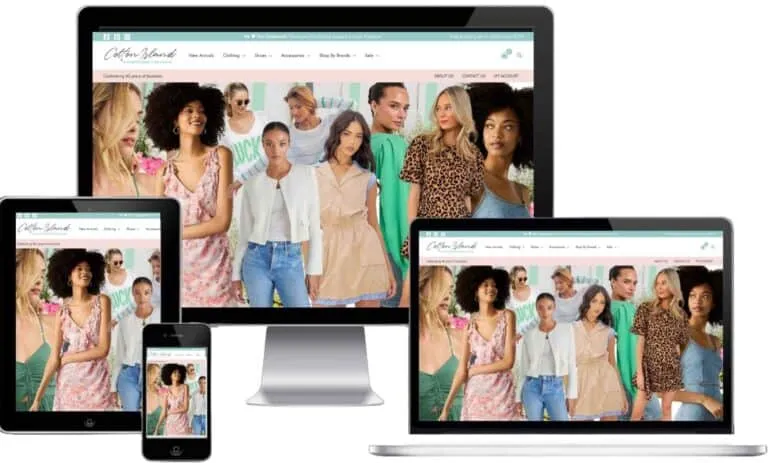
Cotton Island
Women’s Boutique | WooCommerce Redesign
A boutique whose cluttered site buried its style. Egochi rebuilt the store with a clean, modern layout and rewired the search and paid programs around it, and the traffic finally converted.
- +80% Organic Traffic Jump
- 5K New Monthly Customers
- $200K Monthly Revenue Increase
-
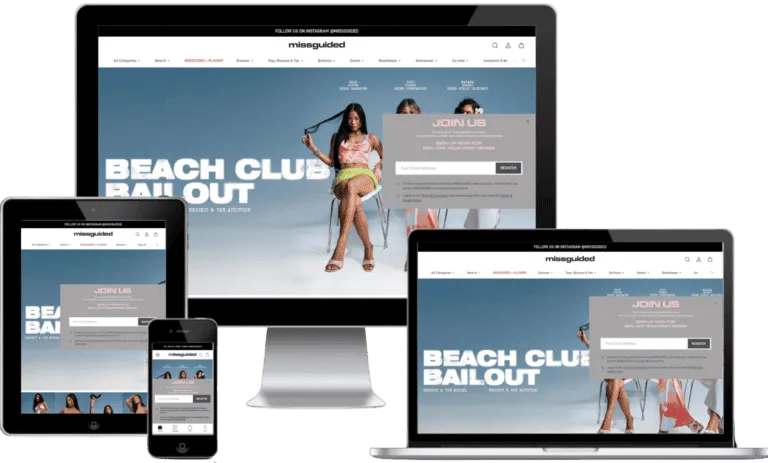
MissGuided
Fast Fashion | Ecommerce
A fast-fashion catalog that punishes any slow template with abandoned carts. Egochi worked the storefront and search program together, and the conversion rate proved the build.
- 4.1% Conversion Rate
- $2M-$3M Monthly Revenue
- 100K+ Monthly Visitors
-
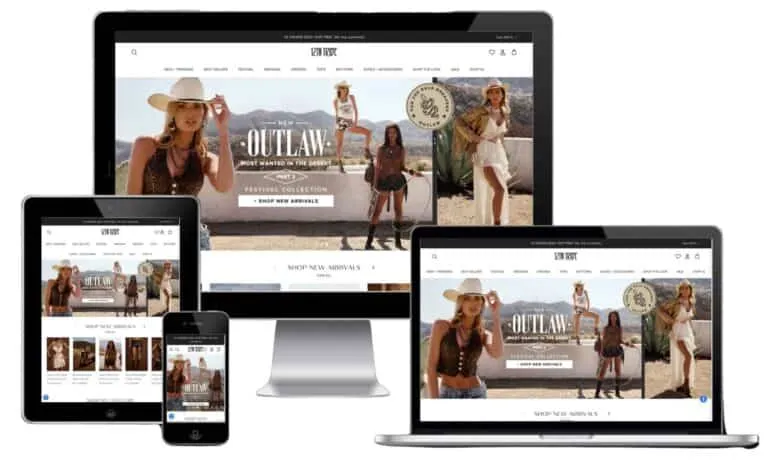
12th Tribe
Women’s Boutique | Shopify Refresh
A boutique with a chic, playful identity its old Shopify theme flattened. Egochi rebuilt the storefront around clear navigation and the brand’s own energy, and conversions and social-driven traffic climbed together. The published case study names no headline figures, so this card does not either.
-
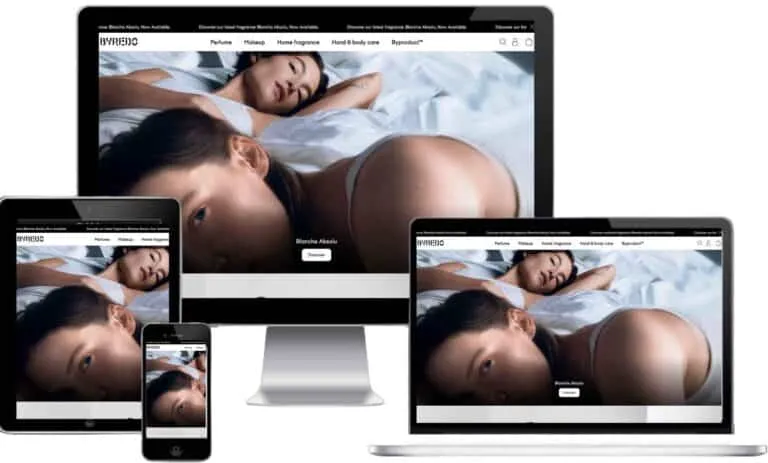
Byredo
Luxury Fragrance | Magento & Ecommerce
A luxury house whose site had to feel as considered as its products. Egochi redesigned the Magento storefront and ran the commerce program around it, and the numbers matched the craft.
- $5.6M Gross Profit in a Year
- 700K+ Instagram Following
-
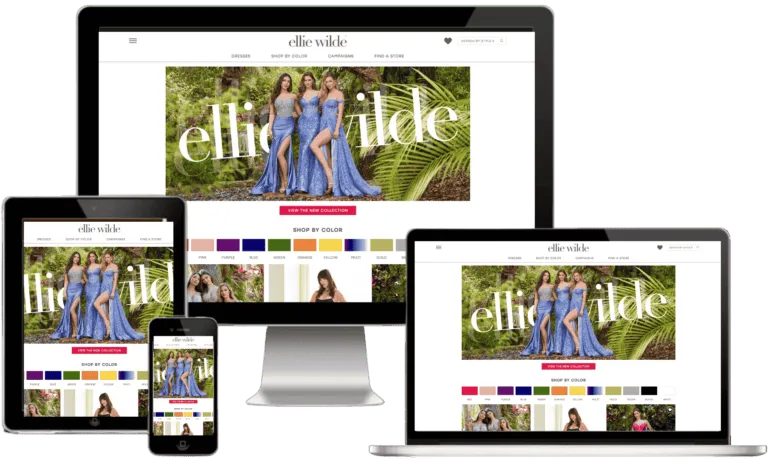
Ellie Wilde
Prom Dresses | Ecommerce
A prom brand whose shoppers browse heavy galleries for months before one buying window. Egochi built the experience that holds that attention, and interaction rose across the store.
- 45% User Interaction Improvement
- 100K+ Monthly Organic Visitors
- 70% Email Open Rate Increase
-
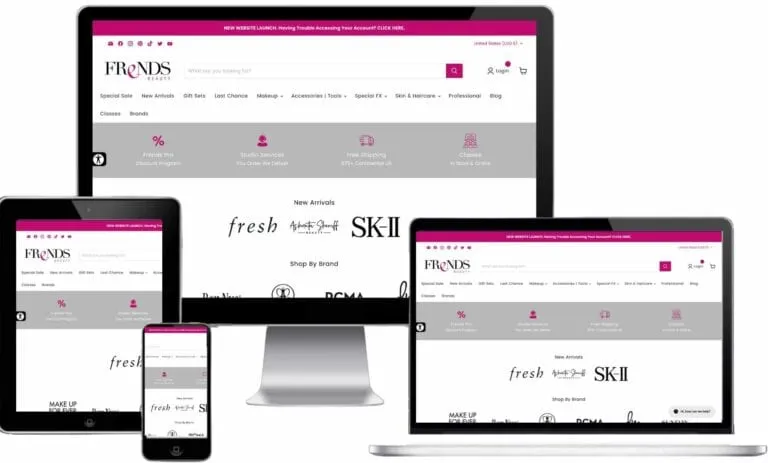
Frends Beauty
Beauty Retail | Magento Redesign
A professional beauty retailer with a deep catalog and an outdated store, the adjacent version of the fashion problem. Egochi redesigned the Magento storefront and rebuilt search and paid with it, and revenue followed.
- +85% Organic Traffic Increase
- 15K Extra Monthly PPC Visitors
- $300K Sales Revenue Growth
See How Egochi Works
A short look at how our team plans, builds, and reports on client work.
Is This Right for You?
This is for you if
- Your store is slow under its own photography and you can feel it in mobile conversion.
- Your returns run high and your product pages leave shoppers guessing about fit.
- Your brand has outgrown its template and needs the kind of editorial store Egochi builds: distinctive, and still instant to load.
This may not be the right fit if
- You need a store live by Friday; a build that converts takes real product imagery and a few weeks.
- You want design decided by decoration rather than sell-through; we design for the brand, but we answer to the numbers.
See the work: Fashion case studies · Web design case studies
The Complete Fashion Program
This page is one part of a five-part program. Each piece works alone and works better together.
-
Fashion Digital Marketing Agency
The full program for brands and boutiques: drops, seasons, sell-through.
-
Fashion SEO
Collection-page rankings that survive season turnover and trend churn.
-
Fashion PPC
Shopping feeds and paid social tuned to margin per style, not blended ROAS.
-
Fashion Social Media
Lookbook and creator content built to move product, not just impressions.
Common Questions About Fashion Web Design
-
How much does a fashion ecommerce website cost?
Builds are quoted by scope after a short call, since a boutique storefront and a multi-market catalog are different projects. Many brands fold the build into an ongoing plan, which starts at $1,500 monthly at Egochi and covers design, SEO, and continued work on the store together, with pricing published before you commit.
-
How fast should a fashion website load?
Fast enough to pass Core Web Vitals on a mid-range phone, which in practice means the largest image renders inside two and a half seconds. Fashion sites fail this more than any other retail category because of image weight, and every extra second costs conversion. Egochi treats speed as a design constraint from day one, not a post-launch patch.
-
Does web design affect how a fashion brand shows up in AI search?
Directly. Google AI Overviews, ChatGPT, Gemini, and Perplexity read what the storefront exposes: product schema, prices, materials, fit content, and a consistent brand entity. Egochi builds that structure into every template, so the store the shopper sees and the data the assistants cite come from the same build.
-
What makes a fashion product page convert?
Confidence, delivered in order: photography that shows the garment moving and worn, model measurements and fit notes that answer the sizing question, reviews that mention fit, visible shipping and returns terms, and a buy button that never leaves reach. Most fashion PDPs have the photography and skip the confidence layer, which is where the returns start.
-
How do I choose a web design agency for a fashion brand?
Load their past fashion stores on a mid-range phone; a portfolio that crawls under its own photography answers the question. Ask what their image pipeline does, whether collection pages get built as landing pages, whether size and fit content sits on every product page, and how old URLs get redirected at launch. An agency that recommends the same platform to everyone has stopped thinking.
Awards and Partnerships Egochi Holds in 2026
-

Egochi Named 2026 Top Digital Marketing Agency by Clutch
Clutch, a B2B market research and reviews platform, names Egochi a top digital marketing agency for 2026. The distinction rests on overall market presence and, most importantly, verified client feedback. Egochi holds a 5.0 rating across 190+ reviews on Clutch.
-

Egochi Is a Certified Google Premier Partner
Egochi is a certified Google Premier Partner, a status Google grants to the top 3% of participating advertising agencies each year. The tier is earned on campaign performance, sustained client growth, and advanced Google Ads certification, and Google reviews it annually rather than granting it for life.
The Team Behind the Work
-

Jobin John
Chief Executive Officer
-

Justin Brown
Head of Search Engine Optimization
-

Bryan Thomson
Head of Web Design & Development
-

Ina Komins
Head of Social Media Marketing
-

Kierra Pita
Head of Advertising & Content Marketing
-

Patricia Turner
Chief Creative Officer
-

William Carter
Chief Digital Strategy Officer
-

Andrew Miller
Senior SEO Strategist
-

Amy Robinson
Content Marketing Manager
-

Betty Harrison
PPC Campaign Specialist
-

Anthony Carter
Lead Digital Account Executive
-

Amanda Cooper
Social Media Director
-

Carol Parker
Senior Client Success Manager
-

Barbara Bennett
Email Marketing Lead
-

Charles Turner
Technical SEO Analyst
-

Brian Sullivan
Creative Director
-

Christine Walker
Director of Project Management
-

Christopher Brooks
Digital Marketing Strategist
-

Daniel Wright
Senior Analytics Specialist
-

David Henderson
Lead Content Strategist
-

Donna Mitchell
Client Communications Manager
-

Elizabeth Foster
Director of Paid Advertising
-

Emily Baredi
Brand Experience Specialist
-

Emma Scott
Social Media Content Creator
-

George Crawford
Technical Solutions Architect
-

Jacob Evans
Digital Content Coordinator
-

James Anderson
Marketing Automation Specialist
-

Jason Palmer
Junior Copywriter
-

Jeffrey Reynolds
Paid Media Analyst
-

Jennifer Lewis
Community Engagement Specialist
-

Jonathan Murphy
SEO Reporting Specialist
-

Joseph Morgan
Influencer Marketing Coordinator
-

Kenneth Stevens
Digital PR Manager
-

Kimberly Harper
Digital Marketing Intern
-

Kevin Morris
SEO Outreach Specialist
-

Lee Dawson
Junior Web Developer
-

Linda Peterson
Email Campaign Coordinator
-

Lisa Thompson
Social Media Ads Specialist
-

Margaret Bradley
Marketing Operations Lead
-

Mark Richards
Data & Insights Analyst
-

Mary Kennedy
Senior Copyeditor
-

Matthew Clark
Growth Marketing Manager
-

Michelle Sanders
Junior Marketing Designer
-

Michael Foster
Senior Conversion Rate Specialist
-

Nancy Wheeler
Digital Analytics Manager
-

Nicholas Pierce
Affiliate Marketing Specialist
-

Nicole Adams
Outreach Program Coordinator
-

Paul Franklin
Paid Social Campaign Manager
-

Richard Barnes
Reputation Management Specialist
-

Robert Murphy
Lead Solutions Architect
-

Ronald Davis
Marketing Technology Analyst
-

Ryan Bell
Paid Media Buyer
-

Sandra Gregory
Digital Account Coordinator
-

Scott Hopkins
CRM Implementation Specialist
-

Shirley Ellis
Customer Insights Manager
-

Stephanie Cross
Brand Content Designer
-

Steven Greene
Web Analytics Specialist
-

Susan Price
Affiliate Campaign Manager
-

Thomas Fisher
Lead Technical Architect
-

Timothy Nash
Mobile Marketing Strategist
Certified & Accredited


A Store as Fast as It Is Beautiful
Send us your store and a recent lookbook. Egochi, a 5.0 rated agency across 190+ Clutch reviews, quotes what we would build, what it costs, and where speed and fit confidence are costing you orders today.
Egochi Stats
- $200M+ Client Revenue Generated
- 500+ Clients Served
- 250+ Google Reviews
- 190+ Clutch Reviews
- 12+ Years in Business
- 60+ Team Members
- 150+ Websites Delivered
- Premier Google Partner
Blog Posts
- Sep 27, 2026 Google September 2026 Spam Update Rolls Out Worldwide
- Aug 12, 2026 GEO vs. SEO: A Comparative Guide for Digital Marketers
- Aug 12, 2026 What is llms.txt? | How to Create llms.txt file for your website
- Aug 12, 2026 What is Semantic SEO? | How to Build Topical Authority That Ranks
- Aug 12, 2026 What is Schema Markup? | How to Add Structured Data to Your Website