Healthcare Web Design Agency
A healthcare website has one conversion that matters, a booked appointment, and most practice sites lose it to friction. The new patient hits a portal login they do not have, a form demanding twenty fields, or a phone number buried three taps deep. Egochi designs healthcare websites that remove that friction: a simple appointment-request path on every page, tap-to-call for the visitor in urgent need, a page per condition and provider so search has something to rank, and accessibility built in rather than retrofitted. The sites run fast on phones, where most patient visits happen, and free of tracking scripts on sensitive pages. Site builds are quoted per project; ongoing plans that include design work start at $1,500 monthly. Get a free quote.
Get Your Free Website Quote See What's Included
- 250+ Google Reviews
- 190+ Clutch Reviews at 5.0
- Google Premier Partner
As Featured In






What a Healthcare Website Has to Get Right
Four decisions Egochi makes differently that separate a site that books patients from a digital brochure.
Booking friction is the silent conversion killer
Portal logins exist for current patients, yet countless practice sites make them the only door, telling the new patient to call during office hours or give up. A new patient needs a request form asking name, contact, reason, and preferred time, nothing more, plus a phone number under the thumb. Egochi keeps both beside the portal, because every field beyond that trades measurable bookings for administrative tidiness.
Accessibility is table stakes, not polish
Healthcare serves aging eyes, screen readers, tremor, and low-bandwidth phones as a matter of course, and ADA demand letters over inaccessible medical sites are no longer rare. Egochi builds to WCAG contrast, type, and keyboard standards from the first layout, because retrofitting accessibility costs more than designing with it.
Site architecture sets the SEO ceiling
Patients search by condition, treatment, provider, and location, so the site needs a credible slot for each: condition pages, treatment pages, provider bios with credentials, a page per location. A five-page brochure site caps every ranking effort before it starts, which is why the architecture gets settled before the design.
The pixel audit belongs in the build
Regulators and plaintiffs have pursued health organizations over tracking scripts on appointment and portal pages, and the safest time to decide which pages carry which scripts is the design phase. Egochi applies the same discipline to the landing pages your healthcare PPC campaigns send paid clicks to.
What's Inside a Healthcare Website Build
Six deliverables from Egochi, all in service of the patient who is ready to book.
-
Booking-First Layout
Egochi puts an appointment-request path on every page and a tap-to-call button that follows the scroll, designed for the visitor who decided before arriving.
-
Accessibility Build
Egochi builds WCAG-minded contrast, readable type, keyboard navigation, and screen-reader structure, verified before launch instead of patched after a complaint.
-
Condition & Provider Architecture
Egochi structures the site with slots for every condition, treatment, provider bio, and location, so it can rank for how patients actually search.
-
Static-Fast Build
Egochi ships a modern static build with green Core Web Vitals and no plugin bloat, tested on mid-range phones and weak signals, where your patients actually are.
-
Privacy-Safe Analytics
Egochi draws a script map deciding which pages carry which tracking, with sensitive pages kept clean, so measurement never becomes a compliance question.
-
Trust & Proof Placement
Egochi places credentials, insurance accepted, real provider photos, and reviews at the decision points where a hesitant patient needs them.
A Practice Website AI Systems Can Read and Cite
Patients ask AI assistants what a symptom might mean, which treatment options exist, what insurance may cover, and which nearby provider to see, and the answers come from websites the systems can parse. Egochi builds practice sites with the structure that makes citation possible: provider, specialty, location, credential, and FAQ data marked up cleanly, with no medical-outcome claims for an assistant to repeat.
Google AI OverviewsChatGPTGeminiPerplexity
-
Architecture decides what can be cited
AI Overviews and ChatGPT lift answers from pages that treat one patient question with visible accountability. The condition, treatment, and provider-bio architecture Egochi builds gives every citable answer a page to live on.
-
Schema is part of the build, not an add-on
Egochi ships structured data for providers, specialties, locations, and FAQs inside the build itself, the signals Gemini and Perplexity use to resolve which practice treats what, and where, before naming anyone in an answer.
-
Speed and cleanliness decide what gets parsed
A static-fast build with green Core Web Vitals is more than a ranking asset; it is what keeps the site consistently crawlable for the systems feeding AI answers. Egochi builds to that standard and keeps tracking scripts off sensitive pages at the same time.
-
Honest content is the only safe content
In a health category, an assistant repeating an inflated claim from your site is a liability. Egochi writes what a treatment involves, who provides it, and what it may cost, and leaves promised outcomes off the site entirely.
How a Healthcare Site Gets Built
-
Teardown of the current site
Egochi walks your site the way a new patient does: how many taps to request an appointment, what loads on a weak phone signal, where credentials and insurance answers hide, and which tracking scripts fire on which pages. The findings arrive as a plain list.
-
Architecture approved before design
You sign off on the Egochi page map first: conditions, treatments, provider bios, locations, and the booking paths connecting them, so nothing important gets bolted on after launch.
-
Design around booking and trust
Layouts put the request form, tap-to-call, credentials, and insurance answers where the patient looks first, with real provider photos placed against every claim the copy makes.
-
Build, accessibility, and speed pass
The site ships as a static build tested against WCAG checks, slow connections, and mid-range phones, with Core Web Vitals held green before launch rather than promised after it.
-
Launch, tracking, and handoff
Redirects preserve every ranking the old pages earned, privacy-safe analytics go live with the agreed script map, and your staff gets a simple way to update providers and services without breaking anything.
Fair Questions About Healthcare Websites
Our site looks professional. Do we actually need a rebuild?
Looks are not the test; booking is. Time how long a new patient needs to request an appointment on a phone, check whether condition pages exist for your service lines, and see what loads on two bars of signal. If those pass, keep your site and Egochi will say so. A ringing phone measures the patients you got, not the ones who gave up.
Does a practice website have to be HIPAA compliant?
The marketing site itself holds no patient records, but two parts of it touch the line: forms and tracking. An appointment form collecting health details needs secure, properly covered handling, and tracking scripts do not belong on appointment or portal pages. Both are build decisions, which is why Egochi answers them in architecture, not after launch.
Why not use a cheap healthcare template?
Templates look like websites and convert like brochures. They bury the booking path, ship with plugin weight that drags on phones, treat accessibility as a checkbox, and give every service line the same generic page. If budget is tight, Egochi would rather build you a small fast site with a clean request path and five strong condition pages than a sprawling template.
How long does a practice website take to build?
A focused practice site typically runs several weeks from kickoff to launch, longer for multi-location groups or when provider photography needs gathering. From you we need provider details and credentials, your service list, insurance information, and a few review sessions. Practices that supply photos and bios early shorten the timeline more than anything else.
Common Mistakes to Avoid
-
Making "book an appointment" resolve to a portal login that only existing patients can pass.
-
Collecting condition details through a standard contact form that emails them to a shared inbox.
-
Filling the site with stock models in white coats where real provider photos would earn the trust.
-
Launching without a page per condition and provider, capping every future ranking effort on day one.
-
Rebuilding without redirects and losing the rankings the old pages quietly earned over years.
Healthcare Web Design Case Studies
Egochi built these health-family sites, with one publishing receipt included for speed at scale. Every number restates the client's published case study.
-
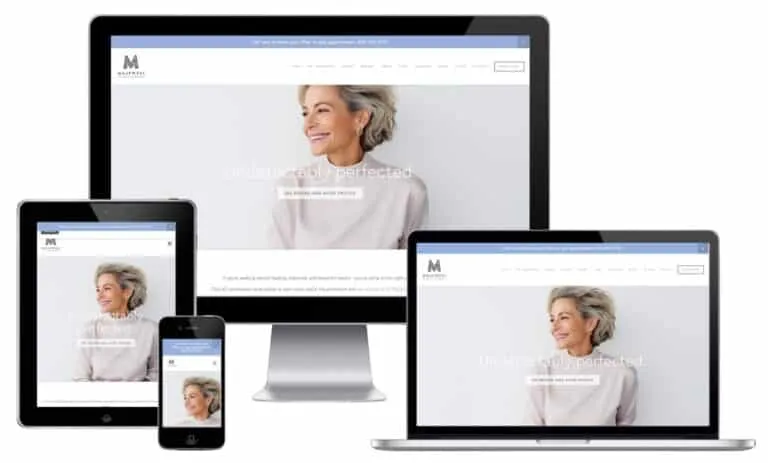
Majewski Plastic Surgery
Plastic Surgery & Med Spa | Jonesboro, AR
A surgical practice and med spa whose old site hid its lead forms. Egochi delivered the redesign, the procedure pages, and the streamlined booking forms behind these numbers.
- +75% Organic Traffic Growth
- 120 Monthly Patient Inquiries
- $150K Added Monthly Revenue
-
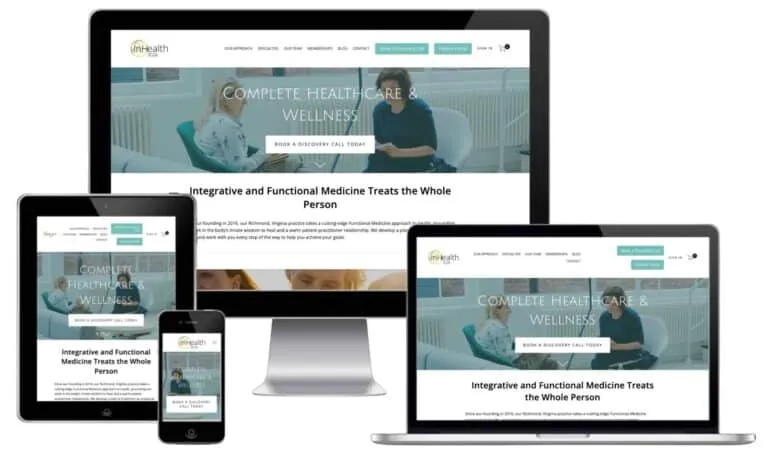
InHealth RVA
Functional Medicine | Richmond, VA
A functional medicine center Egochi rebuilt for clarity and full accessibility: keyboard support, ARIA labels, high-contrast text, and a booking path patients actually finish.
- 98% ADA Compliance Score
- 120 Monthly Appointment Requests
- +82% Organic Traffic Growth
-
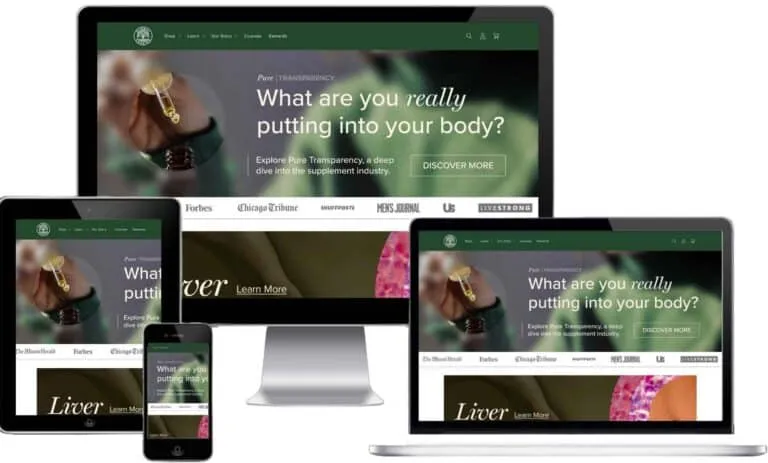
Global Healing
Health Supplements | National Ecommerce
A national supplement store with a catalog its design buried. Egochi rebuilt the storefront, reached a full accessibility score, and cut the friction that killed carts.
- 100% ADA Compliance Score
- 20% Cart Abandonment Drop
- +60% Organic Traffic Growth
-
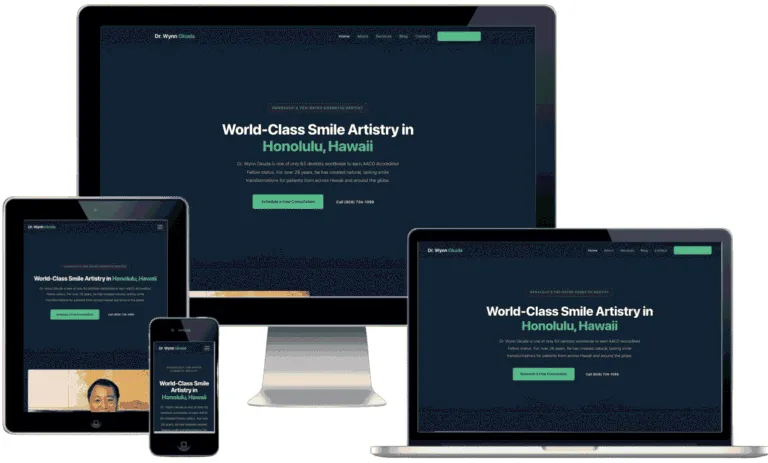
Honolulu Dental Practice
Cosmetic Dentistry | Honolulu, HI
A cosmetic practice led by an AACD Accredited Fellow. Egochi redesigned the WordPress site around three core treatment paths and one clear booking flow, with credibility placed where patients look first. The full story is in the case study.
-
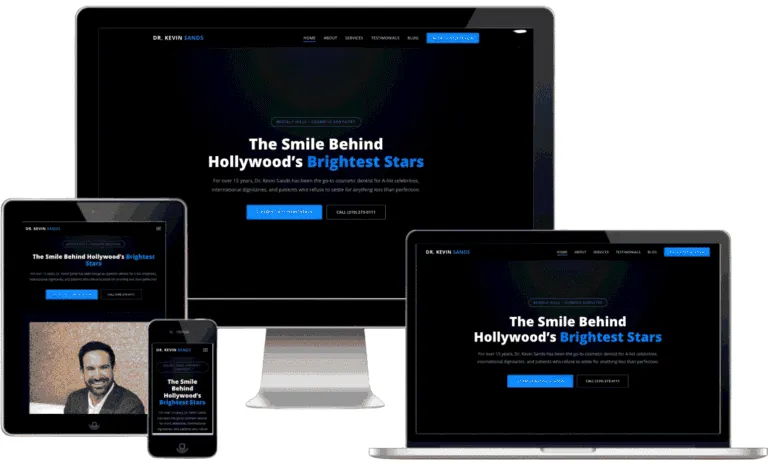
Cosmetic Dentistry Beverly Hills
Cosmetic Dentistry | Beverly Hills, CA
An elective practice whose pages lost researchers in a bounce. Egochi rebuilt the service pages patients read before a consult, and time on page rose while bounces fell.
- 41% More Time on Service Pages
- 22% Bounce Rate Reduction
- 64% Local Organic Sessions
-
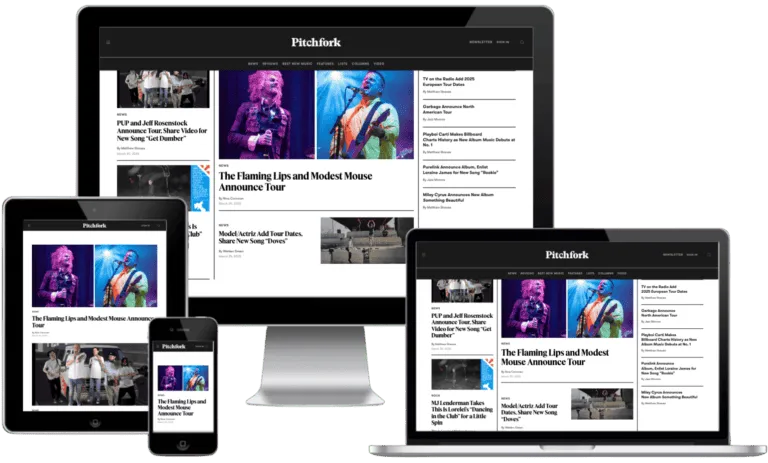
Pitchfork Media
Music Publication | Performance Rebuild
A publishing receipt from the wider roster, included for scale. The Egochi performance work cut load times for a site serving millions, the same speed discipline every practice site gets.
- -60% Load Time
- +320% Engagement
- 2.6M Monthly Visitors
See How Egochi Works
A short look at how our team plans, builds, and reports on client work.
Is This Right for You?
This is for you if
- Your current site funnels every visitor to a portal login or a generic contact form.
- You are adding service lines or providers and the site has nowhere credible to put them.
- Your site drags on phones and you suspect patients in urgent need are not waiting to find out.
This may not be the right fit if
- You want a stock-photo template live by Friday; a site Egochi builds to book takes real provider material and a few weeks.
- You only need a business-card page and expect no new patients from search; a full rebuild will not earn its cost back there.
See the work: Healthcare case studies · Web design case studies
The Complete Healthcare Program
This page is one part of a five-part program. Each piece works alone and works better together.
-
Healthcare Digital Marketing Agency
The full program with medical E-E-A-T and HIPAA-aware campaign practice.
-
Healthcare SEO
Condition and treatment rankings that fill schedules against hospital systems.
-
Healthcare PPC
Patient-acquisition campaigns run inside the platform rules for health ads.
-
Healthcare Social Media
Trust-building provider content that stays compliant while it converts.
Common Questions About Healthcare Web Design
-
How much does a healthcare website cost?
Egochi quotes site builds by scope after a short call, since a single-location practice site and a multi-location group site are different projects. Many practices fold the build into an ongoing plan, which starts at $1,500 monthly at Egochi and covers design, SEO, and updates together, so the site keeps earning after launch.
-
Does website structure affect AI search visibility?
Directly. ChatGPT, Gemini, Perplexity, and Google AI Overviews cite sites they can parse: a page per condition and provider, structured data naming who treats what and where, fast clean markup, and FAQ answers written plainly. Egochi builds practice sites to that structure, so the same architecture that ranks also gets cited.
-
What should a medical practice website include?
A simple appointment-request path on every page, tap-to-call, provider bios with credentials and real photos, a page per condition and treatment, insurance accepted, location details, and reviews placed where hesitation happens. Roughly in that order: the patient verifies you are legitimate and reachable first, and researches second.
-
Do healthcare websites need to meet accessibility standards?
Yes, on both practical and legal grounds. A large share of patients arrive with aging eyes, assistive technology, or low-bandwidth phones, and ADA claims over inaccessible medical sites keep rising. Egochi builds to WCAG contrast, type, keyboard, and screen-reader standards from the start, which costs far less than retrofitting after a demand letter.
-
How do I pick a healthcare web design agency?
Time the booking path on their past work: if requesting an appointment takes more than a minute on a phone, that is the site you will get. Ask how accessibility gets verified before launch rather than patched after a complaint, which pages will carry tracking scripts, and whether the architecture leaves slots for condition and provider pages. Egochi shows all of that in its healthcare builds before you sign.
Awards and Partnerships Egochi Holds in 2026
-

Egochi Named 2026 Top Digital Marketing Agency by Clutch
Clutch, a B2B market research and reviews platform, names Egochi a top digital marketing agency for 2026. The distinction rests on overall market presence and, most importantly, verified client feedback. Egochi holds a 5.0 rating across 190+ reviews on Clutch.
-

Egochi Is a Certified Google Premier Partner
Egochi is a certified Google Premier Partner, a status Google grants to the top 3% of participating advertising agencies each year. The tier is earned on campaign performance, sustained client growth, and advanced Google Ads certification, and Google reviews it annually rather than granting it for life.
The Team Behind the Work
-

Jobin John
Chief Executive Officer
-

Justin Brown
Head of Search Engine Optimization
-

Bryan Thomson
Head of Web Design & Development
-

Ina Komins
Head of Social Media Marketing
-

Kierra Pita
Head of Advertising & Content Marketing
-

Patricia Turner
Chief Creative Officer
-

William Carter
Chief Digital Strategy Officer
-

Andrew Miller
Senior SEO Strategist
-

Amy Robinson
Content Marketing Manager
-

Betty Harrison
PPC Campaign Specialist
-

Anthony Carter
Lead Digital Account Executive
-

Amanda Cooper
Social Media Director
-
Carol Parker
Senior Client Success Manager
-

Barbara Bennett
Email Marketing Lead
-

Charles Turner
Technical SEO Analyst
-

Brian Sullivan
Creative Director
-

Christine Walker
Director of Project Management
-

Christopher Brooks
Digital Marketing Strategist
-

Daniel Wright
Senior Analytics Specialist
-

David Henderson
Lead Content Strategist
-

Donna Mitchell
Client Communications Manager
-

Elizabeth Foster
Director of Paid Advertising
-

Emily Baredi
Brand Experience Specialist
-

Emma Scott
Social Media Content Creator
-

George Crawford
Technical Solutions Architect
-

Jacob Evans
Digital Content Coordinator
-

James Anderson
Marketing Automation Specialist
-
Jason Palmer
Junior Copywriter
-

Jeffrey Reynolds
Paid Media Analyst
-

Jennifer Lewis
Community Engagement Specialist
-

Jonathan Murphy
SEO Reporting Specialist
-

Joseph Morgan
Influencer Marketing Coordinator
-

Kenneth Stevens
Digital PR Manager
-

Kimberly Harper
Digital Marketing Intern
-

Kevin Morris
SEO Outreach Specialist
-

Lee Dawson
Junior Web Developer
-

Linda Peterson
Email Campaign Coordinator
-

Lisa Thompson
Social Media Ads Specialist
-

Margaret Bradley
Marketing Operations Lead
-

Mark Richards
Data & Insights Analyst
-

Mary Kennedy
Senior Copyeditor
-

Matthew Clark
Growth Marketing Manager
-

Michelle Sanders
Junior Marketing Designer
-

Michael Foster
Senior Conversion Rate Specialist
-

Nancy Wheeler
Digital Analytics Manager
-

Nicholas Pierce
Affiliate Marketing Specialist
-

Nicole Adams
Outreach Program Coordinator
-

Paul Franklin
Paid Social Campaign Manager
-

Richard Barnes
Reputation Management Specialist
-

Robert Murphy
Lead Solutions Architect
-

Ronald Davis
Marketing Technology Analyst
-

Ryan Bell
Paid Media Buyer
-

Sandra Gregory
Digital Account Coordinator
-

Scott Hopkins
CRM Implementation Specialist
-

Shirley Ellis
Customer Insights Manager
-
Stephanie Cross
Brand Content Designer
-

Steven Greene
Web Analytics Specialist
-

Susan Price
Affiliate Campaign Manager
-

Thomas Fisher
Lead Technical Architect
-

Timothy Nash
Mobile Marketing Strategist
Certified & Accredited


A Website Where Booking Takes a Minute
Send us your current site and your service lines. Egochi, the healthcare web design agency behind the builds above, quotes what we would build, what it costs, and where your site loses patients today.
Egochi Stats
- $200M+ Client Revenue Generated
- 500+ Clients Served
- 250+ Google Reviews
- 190+ Clutch Reviews
- 12+ Years in Business
- 60+ Team Members
- 150+ Websites Delivered
- Premier Google Partner
Blog Posts
- Sep 27, 2026 Google September 2026 Spam Update Rolls Out Worldwide
- Aug 12, 2026 GEO vs. SEO: A Comparative Guide for Digital Marketers
- Aug 12, 2026 What is llms.txt? | How to Create llms.txt file for your website
- Aug 12, 2026 What is Semantic SEO? | How to Build Topical Authority That Ranks
- Aug 12, 2026 What is Schema Markup? | How to Add Structured Data to Your Website